
Outcome: By following this guide during winter months (January-March), Indiana homeowners will design and install a comprehensive drainage system to eliminate spring flooding, standing water, and yard water problems. Skill Level: Intermediate (DIY-friendly with professional guidance options). Timeframe: 8-12 weeks for planning and installation.
Before You Begin: Prerequisites
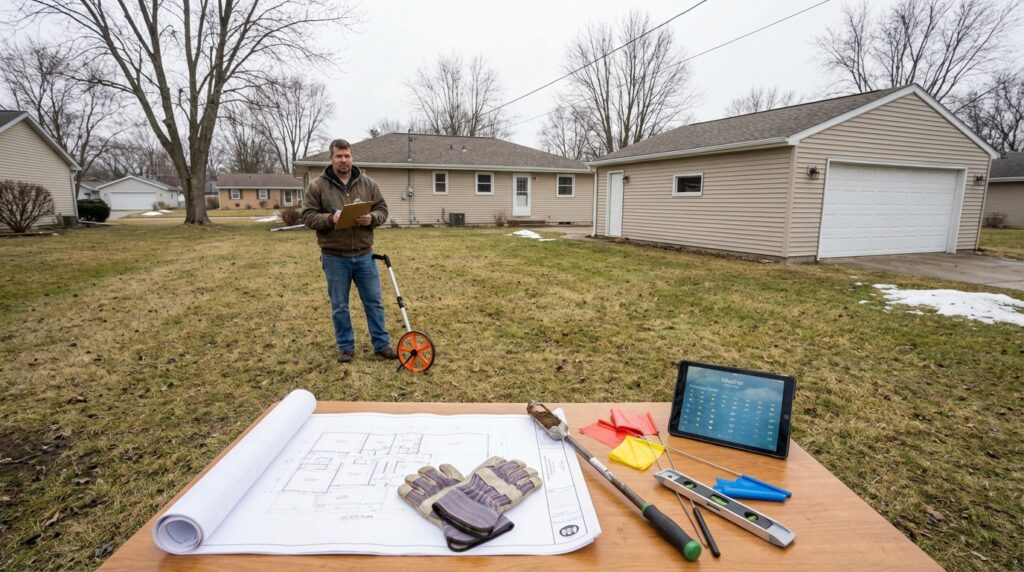
- Required Knowledge: Understanding of your property’s slope, elevation, and soil type (clay soil, topsoil composition)
- Professional Consultations: Contact the Indiana Department of Natural Resources and local municipality regarding drainage permits
- Soil Analysis: Conduct a percolation test to determine water absorption rates and clay content
- Budget Planning: Allocate $2,000-$8,000 for professional drainage contractor services or $500-$3,000 for DIY yard drainage solutions for Indiana homes
- Tools Needed: Shovel, level, trenching equipment (rental), drainage pipe, gravel, filter fabric, geotextile fabric
- Timeline Consideration: Begin planning in January to complete installation before spring thaw flooding
Step 1: Assess Current Drainage Issues and Yard Hydrology (January-February)
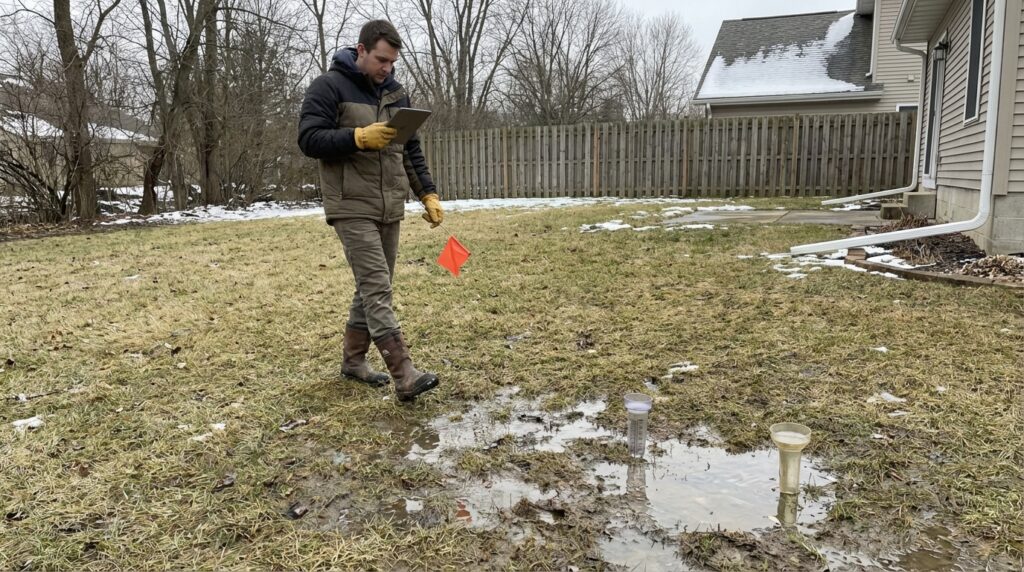
Indiana spring flooding results from snowmelt, heavy rainfall, and poor drainage combined with Midwest weather patterns and freeze-thaw cycle conditions. According to the USDA Soil Conservation Service (2024), proper assessment prevents 85% of residential drainage solutions failures.
1.1 Document Existing Water Pooling and Standing Water Problems
Walk your property after precipitation events to identify areas with water accumulation, muddy yard conditions, and lawn water accumulation. Mark locations with flags where standing water persists for more than 24 hours. Photograph flooded yard areas and note proximity to your foundation drainage system.
1.2 Evaluate Ground Saturation Problems and Soil Drainage
Dig test holes 18-24 inches deep in problem areas to examine soil compaction and clay content. Fill holes with water and measure drainage efficiency by timing how long water takes to disappear. Clay soil common in Indiana typically drains at 0.06 inches per hour, requiring subsurface water control solutions.
1.3 Map Water Flow and Runoff Patterns
Identify the direction of stormwater runoff control across your yard slope using a line level or smartphone app. Document how surface water moves during rainfall management events. Note any water flow toward basement flooding-prone areas or foundation water damage prevention zones.
1.4 Inspect Existing Drainage Infrastructure
Examine your gutter system, downspout extensions, and any existing drainage channels. The Indiana Department of Natural Resources recommends extending downspouts at least 10 feet from foundations to prevent foundation issues and basement waterproofing failures.
Step 2: Design Your Residential Drainage System (February)
Effective landscape drainage planning combines multiple water diversion techniques tailored to Indiana flooding issues and property grading services requirements.
2.1 Select Appropriate Drainage Solutions
For Surface Water Removal:
- Yard Slope Correction: Regrade property to create minimum 2% slope (2 inches drop per 10 feet) away from structures using land grading and topsoil addition
- Swale Construction: Build shallow channels (12-18 inches deep) to redirect water flow toward drainage outlets
- Channel Drain Installation: Install linear drains in driveways and patios for ponding water elimination
For Subsurface Drainage:
- French Drain Installation: The most effective solution for Indiana spring flooding yard preparation, consisting of perforated pipe surrounded by gravel and wrapped in geotextile fabric
- Dry Well Systems: Underground chambers that collect and slowly release groundwater into surrounding soil
- Catch Basin Installation: Collection points that capture surface drainage before directing it through underground drainage pipes
For Landscape Water Control:
- Rain Garden Installation: Depressed areas planted with water-tolerant species that absorb stormwater runoff control within 24-48 hours
- Permeable Pavement: Porous surfaces for driveways and patios that allow water absorption directly into soil
2.2 Create a Drainage System Design Plan
Draw a property map showing water flow patterns, proposed drainage locations, and water discharge points. A civil engineer or landscape architect can optimize yard drainage solutions for complex Indiana soil drainage improvement techniques. Your plan should include:
- Trench drain locations with depth specifications (typically 18-24 inches)
- Drainage pipe routes (PVC drainage pipe installation or corrugated pipe vs solid pipe drainage comparison)
- Pop-up emitter installation points at least 10 feet from property lines
- Gravel selection specifications (3/4-inch crushed stone for drainage systems)
- Filter fabric placement to prevent soil erosion into drainage capacity
2.3 Calculate Materials Needed for Yard Drainage Project
For a typical French drain system covering 50 linear feet:
- 50 feet of 4-inch perforated pipe
- 2 cubic yards of drainage gravel
- 60 feet of geotextile fabric (4-foot width)
- 1-2 pop-up emitters for water redirection
- Connector fittings and end caps
Step 3: Obtain Building Permits and Professional Services (March)
3.1 Contact Your Local Municipality for Drainage Permits
Most Indiana counties require building permits for excavation work exceeding 12 inches depth or modifying natural water flow patterns. Submit your drainage system design to local authorities 2-4 weeks before planned installation. Permit costs typically range from $50-$200.
3.2 Hire a Drainage Contractor Indiana (If Not DIY)
Professional drainage contractor Indiana recommendations include verifying:
- State licensing and insurance coverage
- Experience with clay soil drainage solutions Indiana properties
- References from recent spring flood prevention for Indiana homeowners projects
- Written estimates including labor, materials, and timeline
The cost of drainage system installation in Indiana averages $3,500-$7,500 for comprehensive systems, while affordable drainage solutions Indiana homeowners can implement through DIY methods cost $800-$2,500.
3.3 Schedule Utility Locates
Call 811 at least 48 hours before trenching services to mark underground utilities. This prevents damage to electrical, gas, water, and communication lines during excavation.
Step 4: Install Your Drainage System (March-April)
Begin installation during dry periods when ground conditions allow excavation. Avoid installing during freeze-thaw cycle periods when soil stability is compromised.
4.1 Prepare the Installation Area
Mark drainage routes with spray paint or stakes. Remove grass and topsoil, storing it separately for restoration. Clear the work area of obstacles and protect existing landscape design elements.
4.2 Excavate Trenches for Underground Drainage
Dig trenches 18-24 inches deep and 12 inches wide for French drain systems. Maintain a consistent slope of 1-2% (1-2 inches drop per 10 feet) toward the drainage outlet. Use a line level to verify proper slope grading throughout the trench.
4.3 Install Filter Fabric and Drainage Materials
- Line the trench with geotextile fabric drainage installation, leaving 12 inches of excess on each side
- Add 2-3 inches of drainage gravel as a base layer
- Place perforated pipe with holes facing down for groundwater collection or up for surface water collection
- Cover pipe with 6-8 inches of gravel
- Wrap excess geotextile fabric over gravel to prevent soil intrusion
- Backfill with topsoil and compact lightly
4.4 Install Pop-Up Emitters and Outlet Points
Position pop-up emitter installation yard drainage points where water can safely discharge without causing erosion prevention issues. Emitters should direct water away from neighboring properties and toward appropriate water discharge areas like swales or rain gardens.
4.5 Complete Surface Grading and Erosion Control
Regrade surrounding areas to direct surface drainage toward catch basins or drainage channels. Install retaining walls if needed for yard slope correction. Apply erosion control measures like sod, seed, or mulch to stabilize disturbed soil.
Step 5: Test and Adjust Your Drainage System (April)
5.1 Conduct Water Flow Testing
Before spring rains arrive, simulate heavy rainfall by running water through the system with a garden hose for 30-60 minutes. Verify that water flows freely through drainage pipes, exits properly at pop-up emitters, and doesn’t create new ponding water elimination challenges.
5.2 Monitor During First Spring Thaw
During initial snowmelt management Indiana residential properties experience in late March-April, inspect your drainage system daily. Look for proper water flow management, absence of waterlogged soil treatment needs, and elimination of previous wet yard remedies zones.
5.3 Make Necessary Adjustments
If water accumulation prevention falls short, adjust surface grading, add supplemental catch basins, or extend drainage pipe routes. Minor modifications during the first season optimize long-term performance.
Troubleshooting Common Drainage Issues
If water pools near the French drain inlet: Verify the trench drain has adequate slope (minimum 1%). Add a catch basin at the high point to improve water capture.
If the system drains slowly: Check for clogged perforated pipe openings or compacted gravel. Flush the system with water or excavate to replace filter fabric if soil has infiltrated.
If basement flooding continues: Your yard drainage may be insufficient for foundation drainage needs. Install a sump pump system and ensure downspout extensions direct water at least 10 feet from the foundation. Consider basement waterproofing as a complementary solution.
If grass health declines along drainage routes: Soil compaction from installation may restrict root damage recovery. Aerate affected areas and overseed with drought-tolerant grass varieties that handle periodic wet lawn conditions.
If neighboring properties receive excess runoff: Add landscape water redirection features like rain gardens or dry wells to absorb water on-site rather than transferring flooding problems to adjacent yards.
Next Steps: Drainage System Maintenance and Lawn Preservation
According to the USDA (2024), properly maintained drainage infrastructure prevents 90% of recurring yard flooding and foundation issues over 10+ years.
Immediate Actions (April-May)
- Document system performance with photos during the first major spring rains
- Restore landscape modification areas with appropriate plantings
- Mark pop-up emitter locations to prevent accidental damage during yard maintenance
Seasonal Maintenance (Ongoing)
- Clean gutter systems and downspouts twice annually to prevent basement flooding risk
- Inspect catch basin grates monthly, removing debris that could restrict water flow
- Monitor rain garden plant stress and replace vegetation as needed for optimal water absorption
- Test pop-up emitters after major storms to ensure proper water discharge
Annual Inspections
- Verify yard slope maintains proper grading (2% minimum away from structures)
- Check for soil erosion around drainage outlets and apply additional erosion prevention measures
- Flush drainage pipes annually to remove sediment buildup that reduces drainage capacity
- Consider professional property enhancement assessments every 3-5 years to identify outdoor flooding solutions improvements
Long-Term Property Improvement
Successful spring water control and seasonal water management protect not only your yard improvement investment but also your home’s foundation, lawn health, and property value. Proper residential flood prevention through comprehensive landscape drainage planning transforms flooded yard challenges into permanent solutions for wet yard Indiana homeowners face annually.
By completing your drainage project planning guide Indiana before spring thaw, you join thousands of homeowners who have eliminated muddy yard conditions, protected their hardscape drainage investments, and ensured dry yard drainage solutions Indiana properties require for optimal outdoor water solutions performance.