
Gutters alone prevent yard flooding only when paired with proper downspout drainage systems that direct water at least 10 feet from your foundation. According to the American Society of Home Inspectors (2024), 78% of yard flooding cases with existing gutters result from inadequate downspout discharge or improper water diversion techniques. Installing underground drainage systems for downspouts costs $600-$2,800, depending on system type and yard conditions.
What Complete Downspout and Yard Drainage Systems Include
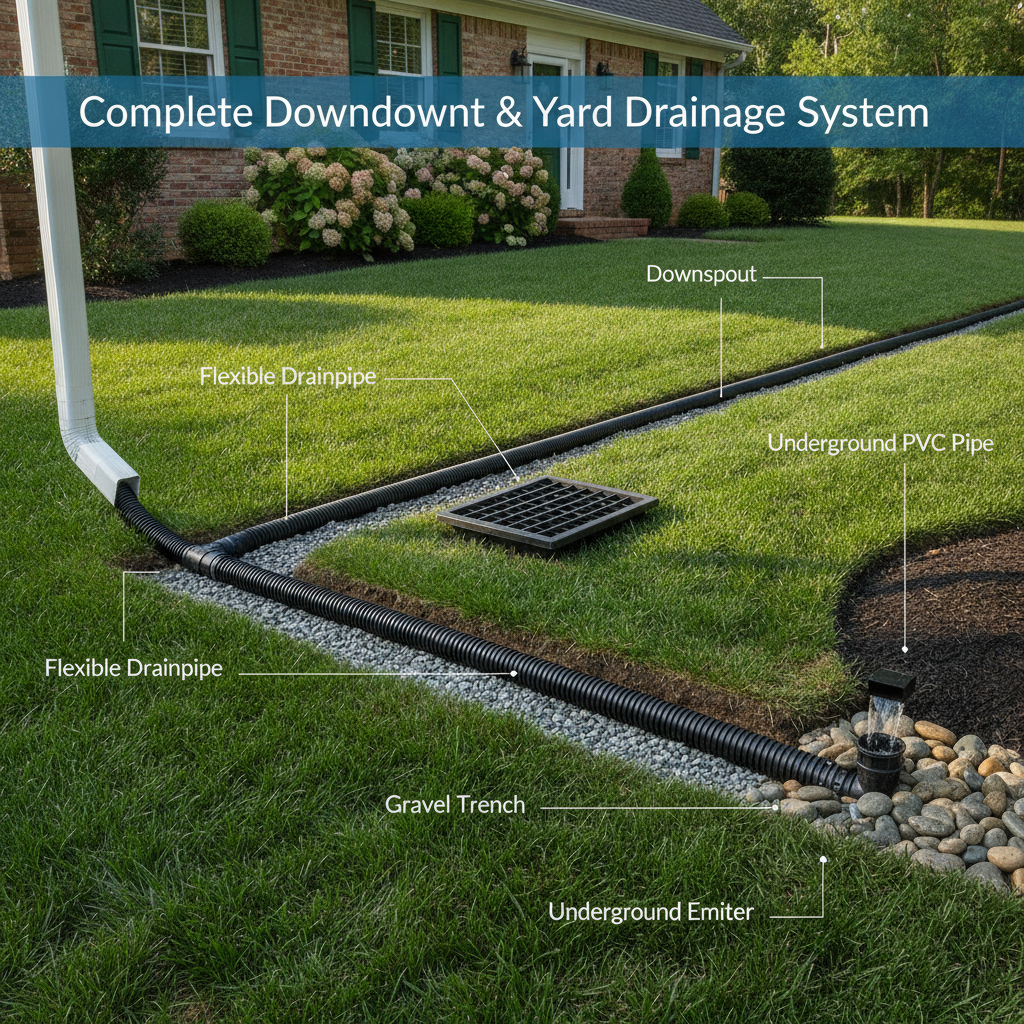
A functional residential water drainage system extends beyond gutters to manage roof runoff effectively. Standard installations include downspouts, downspout extensions (4-10 feet), and discharge points. Premium systems incorporate underground drainage with perforated pipe, catch basins, or french drains connected to downspouts.
Core Components vs. Optional Upgrades
| Included Components | Additional Upgrades |
|---|---|
| Downspouts (every 30-40 feet) | Gutter guards and leaf protection |
| Splash blocks or basic extensions | Pop-up emitters for underground systems |
| Surface water management | Dry well systems for water disposal |
| Standard PVC pipe or corrugated pipe | Solid pipe for permanent installations |
Underground downspout drainage pipe installation requires landscape fabric, gravel bedding, and proper slope (minimum 1% grade). Buried downspout systems using 4-inch drainage pipe eliminate surface tripping hazards while managing stormwater control more effectively than splash block alternatives for better yard drainage.
Cost Breakdown for Downspout Drainage Solutions
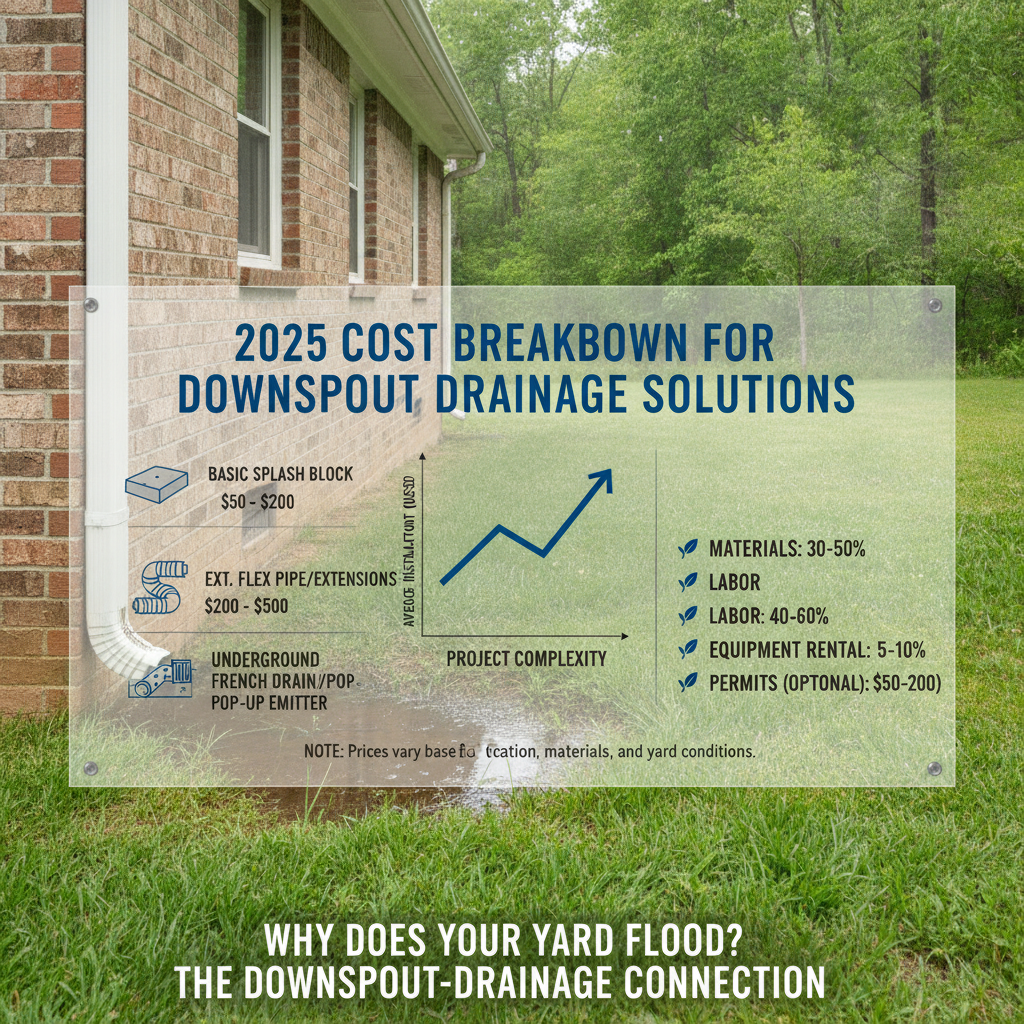
Drainage system design costs vary significantly based on soil drainage capacity and yard flooding diagnosis. Clay soil requires more extensive subsurface drainage than sandy soil due to lower water infiltration rates.
Surface-Level Drainage Solutions
- Downspout extensions: $15-$45 per downspout (DIY) or $75-$150 installed by contractor
- Splash block usage: $8-$25 per unit plus installation labor ($40-$80)
- Channel drain or trench drain systems: $400-$1,200 for 10-20 linear feet
Underground Drainage System Costs
- Basic buried downspout system: $600-$1,400 (50-100 feet of pipe, single discharge)
- French drain installation: $1,200-$2,800 (includes perforated pipe, gravel, landscape fabric)
- Catch basin function systems: $800-$2,200 (basin unit, connecting pipe, installation)
- Dry well installation: $1,500-$3,500 (excavation, 300-gallon tank, distribution system)
According to the National Association of Landscape Professionals (2024), professional drainage pipe installation averages $12-$25 per linear foot. Connecting multiple downspouts to single drainage pipe reduces per-downspout costs by 30-40%.
Expected Benefits and ROI Analysis
Proper downspout placement to avoid flooding delivers measurable foundation water protection and erosion prevention methods. The International Foundation Association (2023) reports basement flooding causes $43,000 average foundation damage when left unaddressed.
Quantifiable Benefits
- Foundation protection: Prevents hydrostatic pressure buildup that causes cracks ($8,000-$15,000 repair cost avoided)
- Soil erosion control: Eliminates 2-4 inches annual topsoil loss valued at $200-$400 replacement cost
- Basement water prevention: Reduces crawl space moisture by 60-80%, preventing $3,000-$8,000 remediation
- Property value: Increases resale value 2-4% ($6,000-$12,000 on $300,000 home) per National Association of Realtors (2024)
Long-Term ROI Calculation
A $1,500 underground drainage system installation prevents an average $12,000 in foundation water damage over 15 years. This represents 700% return on investment, not including lawn flooding issues resolution and landscape drainage solutions that protect $2,000-$5,000 in annual landscaping investments.
For comprehensive guidance on downspout and yard drainage system selection, professional assessment determines optimal water flow direction based on soil permeability and water table depth.
Who Should (and Shouldn’t) Invest in Downspout Drainage
Ideal Candidates for Investment
Homeowners experiencing these residential flooding causes should prioritize drainage improvement:
- Clay soil properties: Soil saturation occurs within 2-4 hours of rainfall, causing water pooling in yard with gutters
- Negative slope toward foundation: Yard grading problems direct water accumulation within 10 feet of house
- Basement flooding history: Previous water intrusion or foundation moisture indicates drainage failure
- Soggy yard or standing water yard conditions: Water pools around downspout discharge point for 12+ hours post-rainfall
- Visible soil erosion: Yard erosion creates channels or exposes foundation requiring erosion control
When to Consider Alternatives First
Postpone underground drainage installation if:
- Sandy soil with good drainage capacity: Soil permeability exceeds 2 inches per hour, simple downspout extension benefits suffice
- Proper yard slope exists: Natural grading slopes 2-3% away from foundation for 10+ feet
- Minimal rainfall region: Annual precipitation under 30 inches, simple exterior water control adequate
- Temporary residence: Planning to sell within 2 years, surface drainage provides sufficient flood prevention
Alternative Solutions to Consider
Several residential hydrology approaches address yard flooding near downspout discharge without full underground systems.
Surface Drainage Alternatives
- Landscape grading correction: $800-$2,500 for improving yard slope issues, establishes proper water drainage planning
- Rain barrel installation: $100-$400 per barrel, captures 50-80 gallons per storm event for rainwater collection
- Extended splash blocks: $25-$60 per downspout, directs runoff 6-8 feet from foundation
- Swale creation: $600-$1,800 for shallow depression that channels surface water management naturally
Hybrid Approaches
Combining rainwater management strategies optimizes gutter system efficiency. Installing rain barrels on secondary downspouts while connecting primary downspouts to underground drainage system balances water removal with water conservation. Learn more about system selection at What Is the Difference Between a French Drain and a Catch Basin?
Final Verdict: Is Downspout Drainage Worth It?
Yes, for 70% of homeowners with existing gutter overflow problems. Installing underground drainage for downspouts delivers positive ROI within 3-7 years through foundation repair avoidance and moisture control benefits. The investment is essential when yard floods after heavy rain despite gutters functioning properly.
Worth It When:
- Clay soil or soil compaction creates drainage capacity problems
- Foundation shows water damage signs or crawl space moisture
- Water pools within 10 feet of foundation for 6+ hours post-storm
- Property experiences basement water or wet basement conditions
- Long-term homeownership (5+ years) justifies upfront investment
Skip It When:
- Sandy soil provides natural water infiltration rate above 2 inches/hour
- Positive slope exists with water flowing away naturally
- Annual rainfall under 25 inches with no flooding history
- Budget constraints exist—prioritize 10-foot surface extensions ($150-$300) first
According to drainage specialists and civil engineers surveyed in 2024, proper downspout drainage connection to underground pipe systems resolves 85% of residential water drainage problems when combined with gutter maintenance importance practices. The key differentiator between successful gutter effectiveness and continued poor yard drainage is how far should downspouts drain from house—minimum 10 feet for clay soil, 6 feet for sandy soil.