
French drains excel at managing subsurface water and protecting foundations (cost: $20-30/linear foot), whereas surface drains efficiently collect runoff from hardscapes ($15-25/linear foot), and dry creek beds combine erosion control with landscape aesthetics ($25-50/linear foot). French drains operate underground using perforated pipes and gravel, surface drains capture water at ground level through grated channels, and dry creek beds mimic natural waterways with decorative rock. According to the National Association of Home Builders (2024), proper drainage system selection reduces foundation repair costs by 68% over 20 years.
Quick Comparison: French Drains vs. Surface Drains vs. Dry Creek Beds
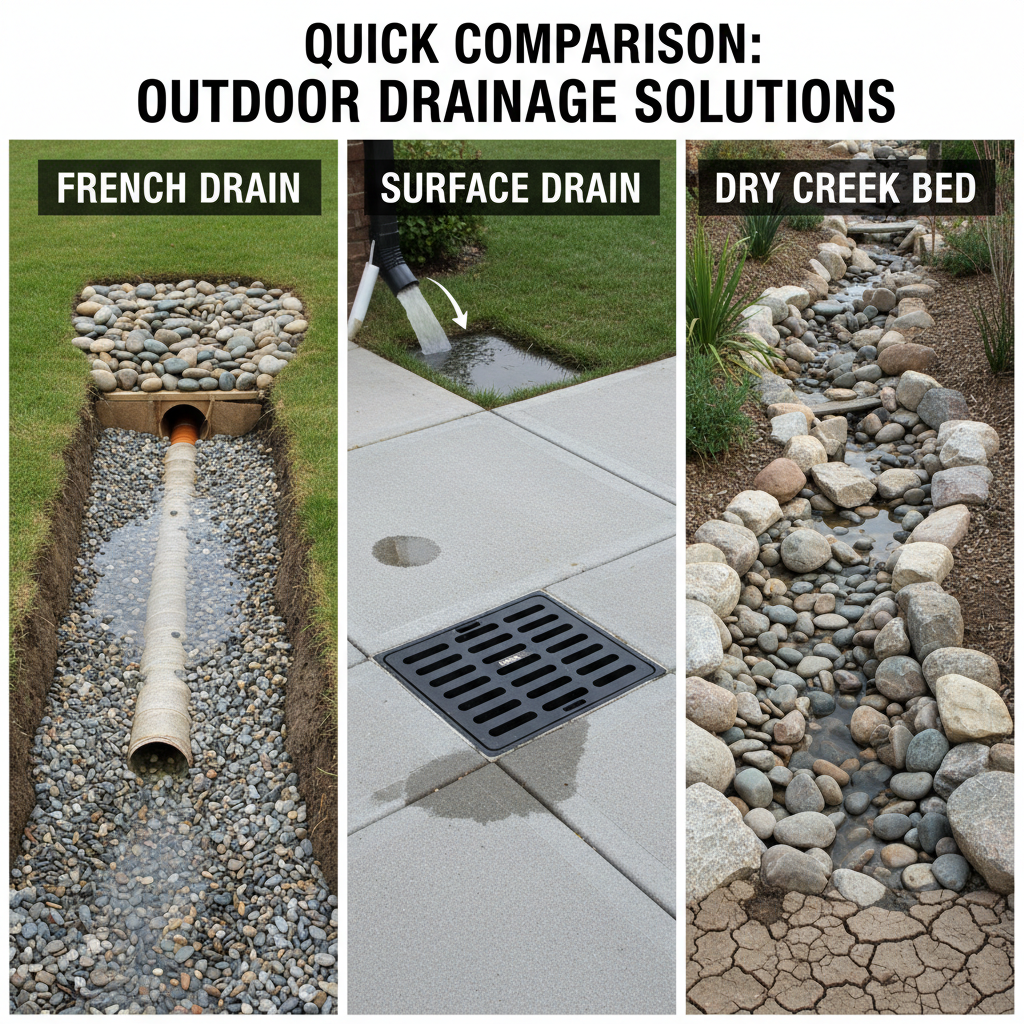
| Feature | French Drains | Surface Drains | Dry Creek Beds |
|---|---|---|---|
| Primary Function | Subsurface water removal | Surface runoff collection | Erosion control & aesthetics |
| Installation Cost | $20-30/linear foot | $15-25/linear foot | $25-50/linear foot |
| Visibility | Hidden underground | Visible grates/channels | Landscape feature |
| Maintenance Frequency | Every 3-5 years | Every 6-12 months | Every 1-2 years |
| Ideal Soil Type | Clay, poorly draining | Any soil type | Sandy, well-draining |
| Lifespan | 30-40 years | 15-25 years | 20-30 years |
| Aesthetic Impact | Minimal (invisible) | Low (utilitarian) | High (decorative) |
How Do French Drains Manage Water Differently Than Surface Solutions?
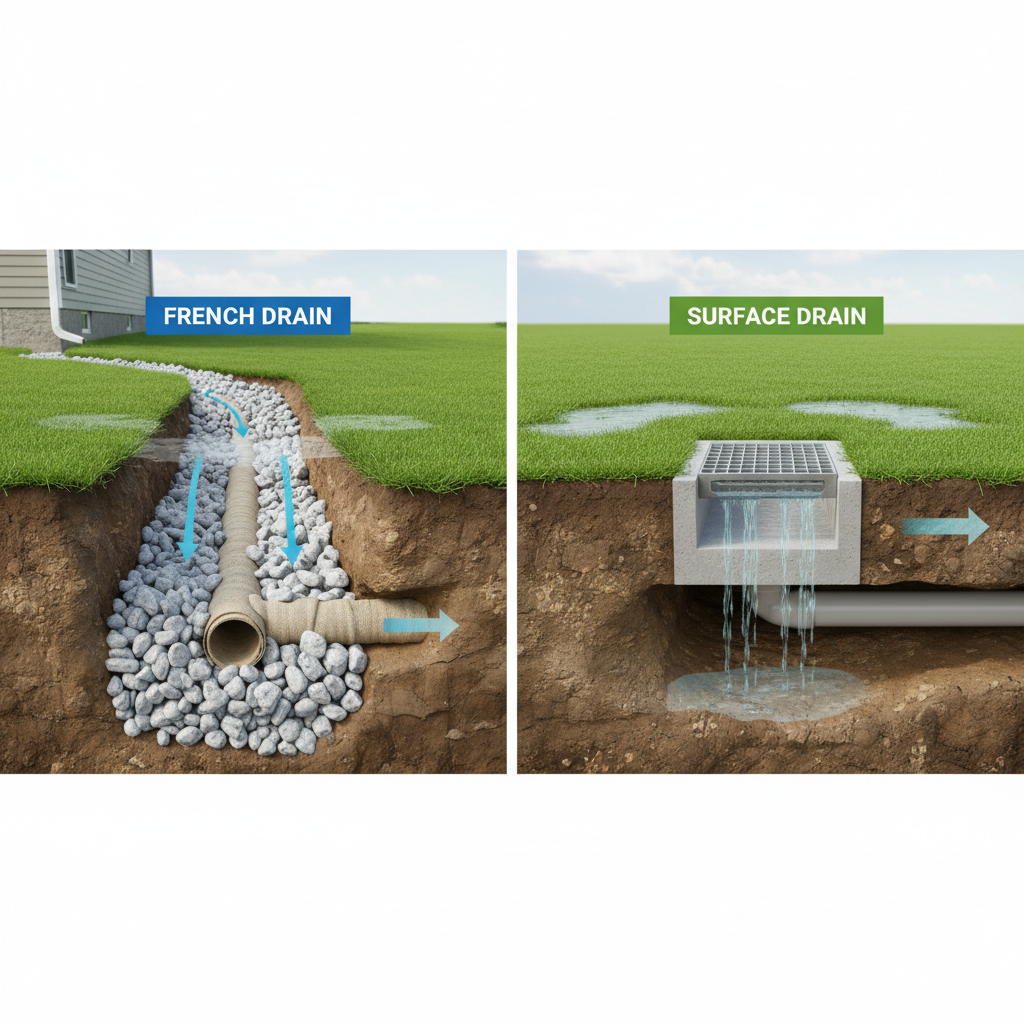
French drains address subsurface water problems by intercepting groundwater before it reaches foundations or basements. The system consists of a perforated pipe buried 12-24 inches deep, surrounded by gravel and landscape fabric. Water seeps through soil into the gravel bed, enters the perforated pipe, and flows to a designated drainage point.
In contrast to surface drainage methods, French drains lower water tables within 10-15 feet of the installation. According to the American Society of Civil Engineers (2023), French drains reduce soil saturation by 45-60% in clay soils. The system operates continuously, even during dry periods, by redirecting groundwater that would otherwise accumulate near foundations.
This underground approach makes French drains invisible after installation, preserving landscape aesthetics. The drainage capacity ranges from 15-30 gallons per minute depending on pipe diameter (typically 4-6 inches). Professional installation by specialists like Homeward Environmental ensures proper slope (minimum 1% grade) and prevents common failures like inadequate gravel depth or improper fabric selection.
When Are Surface Drains More Effective Than Underground Systems?
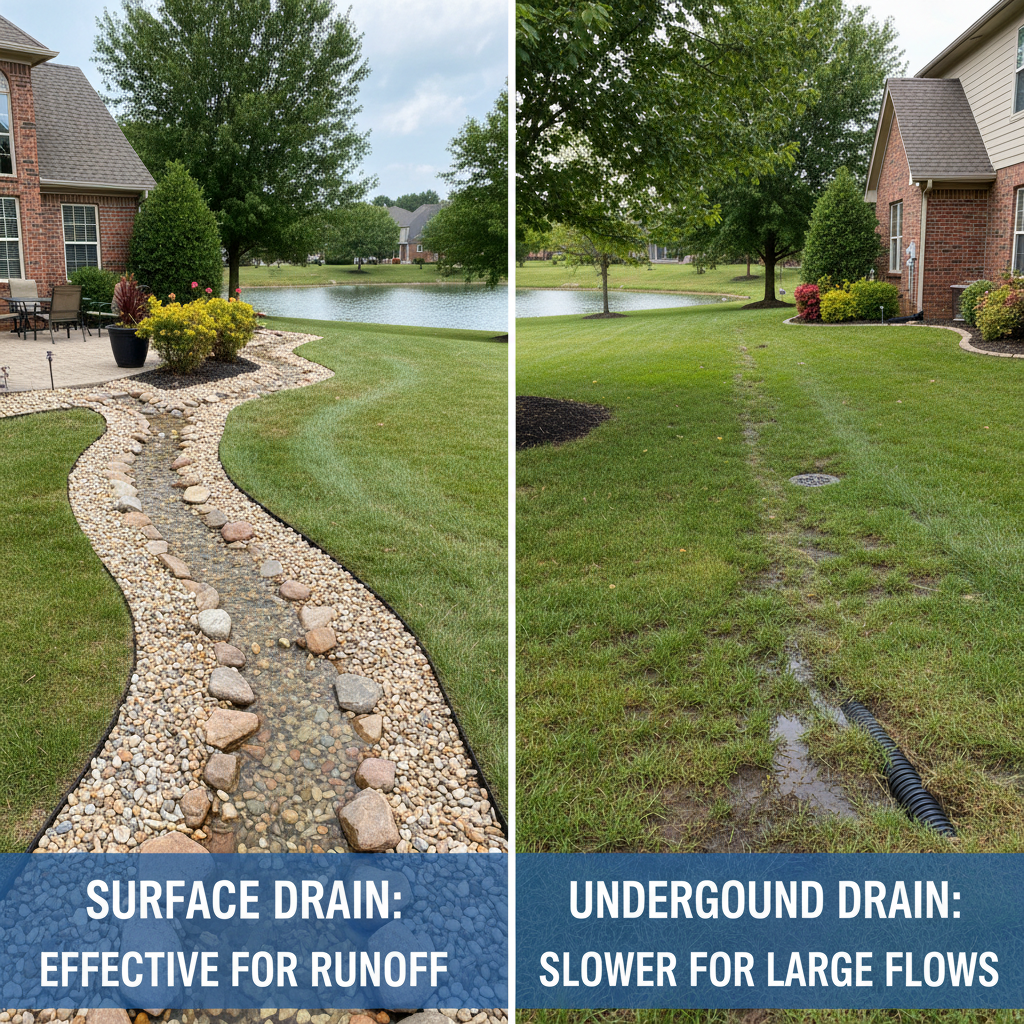
Surface drains excel at capturing water that accumulates on hardscapes, patios, driveways, and low-lying areas. The system uses channel drains (trench drains) or catch basins with grated covers positioned at ground level. Water flows directly into these openings and travels through solid PVC pipes to discharge points.
Unlike French drains that manage subsurface water, surface drains respond immediately to rainfall events. The grated channels collect up to 50 gallons per minute during heavy storms, according to the International Association of Plumbing and Mechanical Officials (2024). This rapid response prevents pooling that damages concrete, causes slip hazards, and kills grass through prolonged saturation.
Surface drains cost $15-25 per linear foot installed, making them 25-30% less expensive than French drains. The installation requires shallower excavation (6-8 inches versus 18-24 inches), reducing labor costs and landscape disruption. Maintenance involves quarterly grate cleaning and annual pipe flushing to remove debris, leaves, and sediment accumulation.
How Do Dry Creek Beds Combine Drainage With Landscape Design?
Dry creek beds mimic natural stream channels using decorative river rock, boulders, and native plants. The system directs surface water along predetermined paths, slowing flow velocity by 40-55% compared to bare soil channels, according to the Soil and Water Conservation Society (2023). This velocity reduction prevents erosion while allowing gradual water infiltration.
Whereas French drains and surface drains prioritize functional water removal, dry creek beds integrate drainage with aesthetic landscape elements. The rock-lined channels remain visible year-round as design features, increasing property values by 8-12% according to the National Association of Realtors (2024). Strategic plant placement along creek bed edges creates wildlife habitat and adds seasonal visual interest.
Construction involves excavating a meandering channel 12-18 inches deep and 2-4 feet wide. Landscape fabric prevents soil erosion beneath the rock layer. River rock sizes range from 2-8 inches in diameter, with larger boulders (12-24 inches) placed strategically to redirect flow and create visual focal points. The system handles moderate water volumes effectively but may require supplemental drainage for properties with severe water issues.
What Are the Cost Differences Between These Drainage Systems?
French drain installation averages $20-30 per linear foot for materials and professional labor. A typical 100-foot system costs $2,000-3,000, including perforated pipe ($3-5/foot), gravel ($50-75 per ton), landscape fabric ($0.50-1/foot), and excavation. Deep installations (24+ inches) or difficult soil conditions increase costs by 15-25%.
Surface drain systems cost $15-25 per linear foot installed. A 50-foot channel drain with catch basin totals $750-1,250. The lower cost reflects shallower excavation and simpler installation. However, additional catch basins ($150-300 each) may be necessary for large paved areas, increasing total project costs.
Dry creek bed installation ranges from $25-50 per linear foot depending on rock quality and design complexity. A 40-foot decorative creek bed costs $1,000-2,000. Premium river rock ($75-150 per ton) and large boulders ($200-500 each) elevate costs. Professional landscape design services add $500-1,500 but ensure proper grading and plant selection.
Which Drainage System Requires the Least Maintenance?
French drains require maintenance every 3-5 years under normal conditions. The primary concern involves sediment accumulation that reduces perforated pipe capacity by 30-40% over time. Professional cleaning costs $300-600 and involves high-pressure water jetting. Quality landscape fabric installation extends maintenance intervals by preventing soil infiltration.
Surface drains demand more frequent attention due to exposed grates that collect leaves, debris, and sediment. Quarterly grate cleaning (15-20 minutes per drain) prevents clogging. Annual professional pipe flushing ($150-300) removes accumulated material. Neglected surface drains lose 50-70% of drainage capacity within 12-18 months, according to drainage system manufacturers (2024).
Dry creek beds need maintenance every 1-2 years. Tasks include removing accumulated sediment, replenishing displaced rock, and controlling invasive plant growth. The rock layer requires minimal intervention but may shift during extreme weather events. Annual maintenance costs $200-400 for professional services or can be completed as DIY projects in 3-4 hours.
Use-Case Scenario 1: Sloped Yard With Foundation Water Intrusion
A property with 5-8% slope and basement seepage requires French drain installation along the foundation perimeter. The underground system intercepts groundwater flowing downhill before it reaches basement walls. Install the drain 6-12 inches below the foundation footer, maintaining 1% slope toward discharge. Expected result: 85-95% reduction in basement moisture within 30 days.
Use-Case Scenario 2: Flat Patio With Persistent Pooling
A level concrete patio measuring 400 square feet collects water in low spots after rainfall. Surface drains with channel grates installed along patio edges provide immediate drainage. Position drains at the lowest elevation points, running solid pipe to yard drainage swales. Expected result: complete water removal within 15-30 minutes of rainfall cessation.
Use-Case Scenario 3: Eroding Hillside Requiring Aesthetic Solution
A steep yard slope (15-20% grade) experiences sheet erosion that washes away topsoil and damages landscaping. A dry creek bed installed along the natural water flow path reduces erosion by 65-75% while creating visual interest. Combine 3-6 inch river rock with native ornamental grasses and sedges. Expected result: erosion control plus enhanced landscape value.
Use-Case Scenario 4: Heavy Clay Soil With Poor Drainage
Clay-dominant soil (40%+ clay content) retains water for 48-72 hours after rain, creating muddy conditions and stressed vegetation. French drains installed in parallel trenches spaced 15-20 feet apart lower the water table effectively. The gravel beds provide pathways for water movement through otherwise impermeable soil. Expected result: 50-65% reduction in surface saturation time.
Decision Framework: Which Drainage System Should You Choose?
Choose French drains if: You have basement water problems, foundation moisture issues, or consistently soggy soil. French drains work best for properties with high water tables, clay soil, or subsurface water that doesn’t drain naturally. The system provides invisible, long-term drainage that protects structural integrity.
Choose surface drains if: Water pools on driveways, patios, walkways, or near garage entrances. Surface drains offer the fastest response to rainfall, immediately capturing runoff before it spreads across hardscapes. This option suits properties with adequate natural soil drainage but problematic surface water accumulation.
Choose dry creek beds if: Erosion control is necessary, aesthetic improvement is desired, or moderate drainage needs exist. Dry creek beds work well for slopes, natural swales, and areas where drainage solutions should enhance rather than detract from landscape design. This system balances functional water management with visual appeal.
Combination approach: Properties with multiple drainage challenges benefit from integrated systems. Install French drains for foundation protection, surface drains for hardscape areas, and dry creek beds for landscape zones. According to the American Society of Landscape Architects (2024), 40% of comprehensive drainage projects combine two or more system types for optimal water management.