
Quick answer: A French drain is worth it if you have surface water or a wet yard from rain runoff; a sump pump is worth it if water is entering your basement or crawl space. Many homes with poor drainage need both systems working together for complete yard drainage and basement waterproofing.
What You Get With Each Drainage Solution
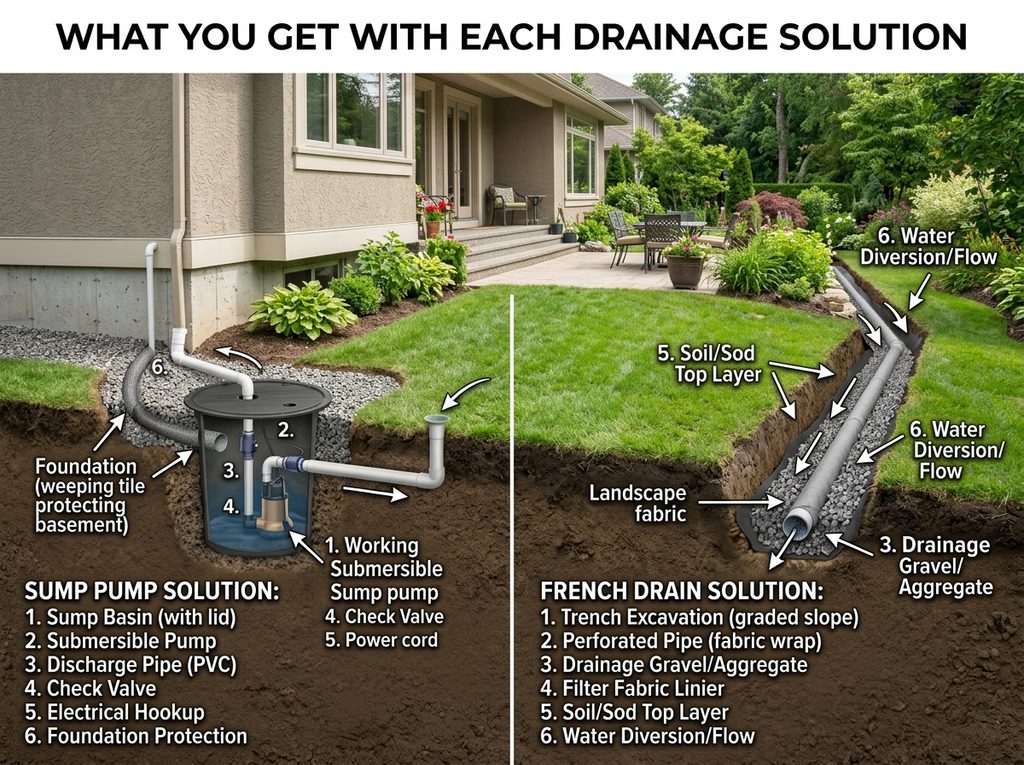
Understanding the difference between sump pump and French drain systems starts with what each one physically does.
French Drain System Inclusions
- A perforated pipe buried in a gravel trench
- Gravity drain design that channels surface water and subsurface water away from your home foundation
- Optional connection to a dry well or catch basin for water dispersal
- Can be installed as a curtain drain to intercept water before it reaches your yard
Sump Pump System Inclusions
- A sump pit installed in the basement or crawl space floor
- An electric drainage pump that actively removes excess water
- A check valve or backwater valve to prevent water backflow
- Discharge line routed away from the home, often paired with a downspout extension
What’s typically extra: Battery backup systems, smart water sensors, and permit fees for exterior drainage work are usually not included in base installation quotes.
Cost Breakdown: French Drain vs Sump Pump Cost Comparison
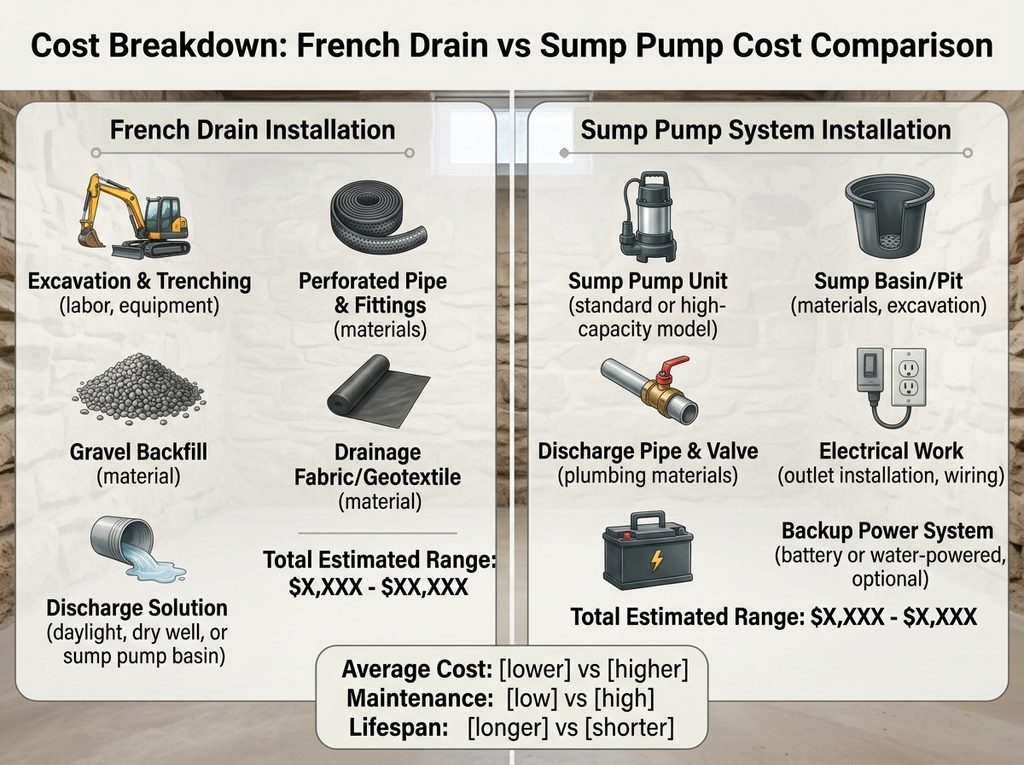
According to home improvement industry data from 2024–2025, drainage solution pricing varies by scope and soil type.
| System | Average Cost (2025) | Cost Factors |
|---|---|---|
| French drain installation | $20–$60 per linear foot | Trench depth, clay soil vs sandy soil, pipe length |
| Sump pump installation | $600–$2,500+ | Pump horsepower, pit excavation, battery backup |
| Combined system | $3,000–$8,000 | Interior drainage + exterior drainage integration |
| Dry well add-on | $500–$1,500 | Size, soil percolation rate |
DIY French drain installation guide projects can lower costs to $10–$20 per foot in materials alone, but improper slope calculation is a common failure point. Homeowners tackling French drain installation for clay soil should note that clay’s poor permeability often demands wider gravel trenches and steeper yard slope for effective drainage.
Expected Benefits & ROI Analysis
Both systems deliver water damage prevention, but they protect different areas of the home.
- French drains stop yard flooding, standing water, and waterlogged lawn conditions by redirecting rainwater diversion before it pools near the foundation.
- Sump pumps prevent basement flooding by managing groundwater and rising water table levels beneath the slab.
- Combined ROI: Remodeling industry data consistently shows drainage and waterproofing upgrades recoup 50–80% of costs at resale due to reduced water seepage risk.
- Preventing one flooded basement event can save $5,000–$20,000 in water damage repair, according to insurance industry estimates.
For homeowners weighing sump pump vs French drain for basement protection, the strongest ROI comes from addressing the water source directly rather than treating symptoms repeatedly.
Who Should — and Shouldn’t — Invest
Signs You Need a French Drain
- Water pooling in the yard after every rainstorm
- Visible surface water runoff toward the house
- Yard slope directing water toward the foundation instead of away
- Landscaping beds that stay saturated for days
When to Install a Sump Pump in Yard or Basement Systems
- Basement or crawl space moisture appearing after heavy rain
- High water table in your region (common in coastal or clay soil areas)
- History of basement flooding despite exterior grading fixes
- Home built below the natural stormwater management grade
Who Shouldn’t Invest Yet
If your only issue is a single low spot in the lawn, simple grading or a gutter system upgrade may resolve it without a full drainage pipe installation. Homes on elevated, well-draining sandy soil rarely need a sump pit.
Alternatives to Consider
- Grading: Reshaping yard slope to move surface water naturally away from the foundation
- Drainage swale: A shallow, vegetated channel that redirects rainwater across the property
- Channel drain: Surface-level grates for patios, driveways, or low-traffic yard areas
- Dry well: An underground reservoir that absorbs excess water gradually
- Downspout extension: A low-cost fix that redirects roof runoff further from the home
For a deeper comparison of exterior versus interior fixes, this guide on sump pump vs French drain yard solutions breaks down which option fits specific yard water problems and soil conditions.
Final Verdict: Is It Worth It?
A French drain is worth it for surface-level yard drainage system needs, typically costing $20–$60 per foot. A sump pump is worth it for basement drainage and crawl space moisture control, running $600–$2,500 depending on complexity. Homes with both wet yards and wet basements benefit most from installing both systems together.
Before committing, consult a licensed drainage contractor to evaluate soil type, water table depth, and yard slope. This ensures the chosen drainage solution matches the actual water source rather than just the visible symptom.