
A French drain is a gravel-filled trench containing a perforated pipe that redirects subsurface water and surface water away from problem areas using gravity flow. Named after Henry French, a Massachusetts judge and farmer who popularized the technique in his 1859 book “Farm Drainage,” this drainage system remains one of the most effective solutions for waterlogging, foundation water damage, and yard flooding prevention as of 2025.
Why French Drains Matter for Property Protection
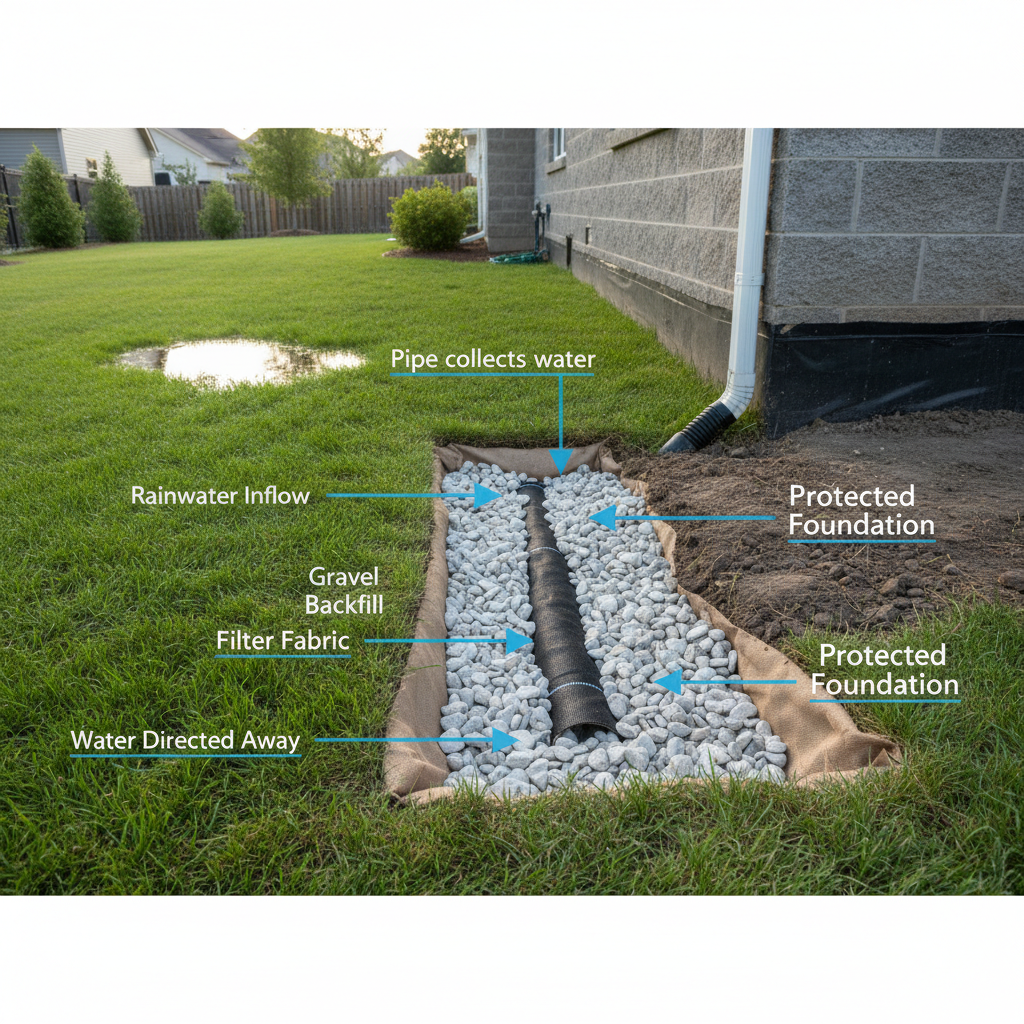
Excess water removal protects your property investment. According to the EPA stormwater management guidelines, improper drainage causes foundation settling, basement water problems, soil erosion, and landscape damage. A French drain provides underground drainage that intercepts groundwater before it reaches vulnerable areas. The system works as a subsurface drainage channel, collecting water through permeable aggregate and transporting it to a safe discharge location via gravity-based drainage.
Water accumulation near foundations creates hydrostatic pressure—force exceeding 500 pounds per square foot against basement walls. This pressure causes cracks, seepage, and structural compromise. By managing the water table and controlling soil moisture, French drains prevent these costly repairs before they occur.
Five Key Characteristics of French Drain Systems
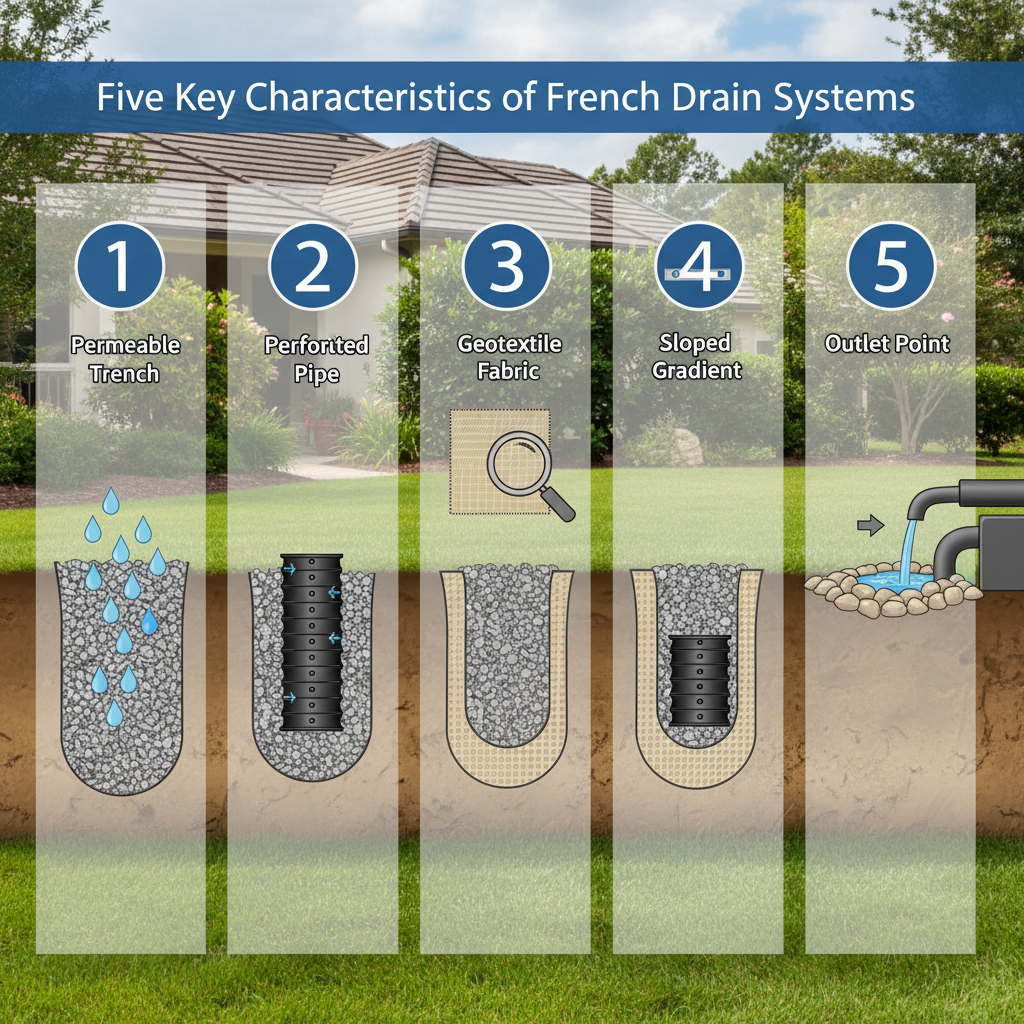
Every effective French drain shares these essential traits:
- Excavated Trench: A channel typically 18-24 inches deep and 12-18 inches wide, following a continuous slope of at least 1% grade (1 inch drop per 8 feet)
- Perforated Drainage Pipe: PVC pipe or corrugated pipe with holes allowing water infiltration, usually 4-6 inches in diameter
- Drainage Rock Envelope: Clean gravel or permeable aggregate (typically ¾-inch crushed stone) surrounding the pipe, facilitating water flow while preventing soil intrusion
- Geotextile Fabric Barrier: Landscape fabric wrapping the gravel to separate it from surrounding soil, preventing clogged drain issues caused by sediment migration
- Outlet System: A designated discharge point such as a dry well, catch basin, municipal storm drain, or daylight outlet at the property line
How French Drain Systems Work: The Four-Stage Water Redirection Process
Understanding water diversion technique mechanics helps determine if this drainage solution fits your needs:
Stage 1: Water Collection. Surface water and subsurface water flow enter the drainage trench through the permeable soil and gravel layers. The porous structure of drainage rock creates a low-resistance pathway, drawing water away from saturated areas through capillary action and gravity.
Stage 2: Pipe Entry. Water seeps through the holes in the perforated drainage tube. The perforations—typically ⅜-inch diameter holes spaced 2-3 inches apart—allow water entry while excluding larger debris. Proper installation positions holes facing downward at 4 and 8 o’clock positions to maximize drainage capacity.
Stage 3: Gravity Transport. The continuous slope of the underground drainage pipe channels collected water toward the outlet. Gravity flow requires no pumps or electricity, making the system reliable during power outages when basement flooding risk peaks.
Stage 4: Safe Discharge. Water exits through a catch basin, retention pond, swale, or other approved outlet complying with municipal code. The discharge location must be lower than the collection point and direct water away from neighboring properties per local building permit requirements.
Component Specifications for Maximum Drainage Effectiveness
Pipe Types and Selection
Two primary options dominate French drain installation as of 2025:
- Solid PVC Pipe with Perforations: Rigid, long-lasting (50+ year lifespan), maintains shape under soil pressure, easier to clean if maintenance becomes necessary. Best for French drain for standing water in yard with clay soil conditions.
- Flexible Corrugated Pipe: Less expensive, easier to install around obstacles, adequate for most residential applications, 20-30 year typical lifespan. Suitable for DIY French drain projects with basic drainage problems.
Best Gravel for French Drain System Performance
The drainage rock specifications directly impact water infiltration rates. Use clean, angular crushed stone—¾-inch diameter provides optimal balance between water flow and structural integrity. Avoid rounded river rock (lower drainage capacity) and limestone (dissolves over time in acidic soil). Sandy soil areas may use slightly larger aggregate; clay soil installations benefit from smaller, more tightly packed stone that maintains void spaces.
French Drain Fabric Type Recommendations
Non-woven geotextile fabric outperforms woven alternatives for subsurface drainage system applications. Look for 4-6 oz per square yard weight rating, which filters sediment while maintaining water flow. The fabric prevents soil particles from filling gravel voids—the leading cause of French drain not working properly after 5-10 years.
Five Common Misconceptions: French Drain Myths vs Reality
Myth 1: French drains work without pipe.
Reality: Original rubble drains (land drains) used only stone-filled trenches. Modern French drain benefits require perforated pipe to channel collected water efficiently. Pipe-free systems clog faster and reduce drainage effectiveness by 60-70% within three years.
Myth 2: Deeper is always better.
Reality: French drain depth for clay soil typically ranges 18-24 inches—sufficient to intercept subsurface water flow without requiring excessive excavation. Deeper trenches (36+ inches) increase installation cost without proportional drainage improvement unless addressing specific water table management needs confirmed by a civil engineer.
Myth 3: All drainage problems need French drains.
Reality: Surface water from roof water drainage or lawn flooding solutions may require simpler alternatives like swales, channel drains, or improved slope grading. French drains excel at subsurface water removal, not surface water management alone.
Myth 4: French drains never require maintenance.
Reality: French drain maintenance and cleaning tips include inspecting outlets annually, flushing pipes every 3-5 years, and monitoring for soggy yard symptoms indicating reduced capacity. Proper initial installation with quality geotextile fabric minimizes but doesn’t eliminate maintenance needs.
Myth 5: DIY installation saves money in all cases.
Reality: Professional French drain installation vs DIY depends on project scope. Simple garden bed drainage may suit DIY approaches. Foundation drains, basement drainage, or installations requiring building permit navigation benefit from experienced drainage contractors who ensure municipal code compliance and proper system design.
French Drain vs Alternative Drainage Solution Options
| System Type | Best Application | Cost Range (2025) | Installation Complexity |
|---|---|---|---|
| French Drain | Subsurface drainage, foundation protection, wet basement solution | $25-50 per linear foot | Moderate to High |
| Surface Drain / Channel Drain | Patio, driveway runoff, concentrated surface water | $15-30 per linear foot | Low to Moderate |
| Swale / Curtain Drain | Large area water rerouting, landscape water management | $10-25 per linear foot | Low (grading required) |
| Dry Well | Downspout drainage, localized water infiltration | $500-2,000 per unit | Moderate |
| Sump Pump System | Interior drainage, crawl space drainage, active water removal | $800-3,000 installed | Moderate (requires power) |
A perimeter drain (also called weeping tile or footing drain) is a specialized French drain type installed at foundation level during construction. For existing homes showing basement water prevention needs, an exterior drainage system or interior drainage solution with sump pump integration may prove more practical than full perimeter drainage retrofit.
Six Symptoms You Need a French Drain
Evaluate your yard water problems against these diagnostic indicators:
- Persistent Standing Water: Puddles in yard remaining 24+ hours after rain indicate poor soil permeability or inadequate drainage requiring water channeling solutions
- Foundation Cracks or Seepage: Basement water problems, crawl space drainage issues, or foundation water damage evidence suggest hydrostatic pressure requiring foundation drainage system installation
- Waterlogged Soil: Soggy yard conditions killing lawn areas or creating muddy lawn zones signal excess water removal needs
- Erosion Patterns: Yard erosion control requirements shown by soil washing, exposed roots, or landscape degradation
- Downspout Water Pooling: Water pooling issues within 10 feet of gutter system discharge points indicate need for downspout water management integration
- Negative Slope or Poor Grading: Property grading directing water toward foundation rather than away—a yard slope issue requiring correction with drainage installation
Professionals like Homeward Environmental provide drainage assessment services to evaluate whether symptoms require French drain solutions or alternative approaches.
Installation Considerations: Depth, Slope, and Permits
How Deep Should a French Drain Be Installed?
Standard French drain trench width requirements specify 12-18 inch width and 18-24 inch depth for residential yard drainage. Deeper installations (30-36 inches) serve specific purposes:
- Foundation drains protecting basement or crawl space
- Clay soil locations with deeper saturation zones
- Interceptor drain systems redirecting high water table flow
- Integration with retaining wall drainage behind structures
French Drain Slope Requirements and Specifications
Minimum 1% grade (1 inch per 8 feet) ensures reliable gravity flow. Steeper slopes (2-3% grade) improve drainage capacity and reduce sediment settlement. Use laser levels or string lines during excavation to maintain consistent slope—the most critical factor determining long-term system performance.
French Drain Permit Requirements by City
Many municipalities require building permits for:
- Foundation drain or perimeter drainage installation
- Systems connecting to municipal storm drains
- Excavation exceeding 24 inches depth
- Work within setback zones near property lines
Contact local building departments before starting installation. Unpermitted work risks fines and may require removal if discovered during property sales.
Cost Analysis: Professional Drainage Installation vs DIY
As of 2025, expect these French drain installation cost per foot ranges:
Professional Installation: $25-50 per linear foot for exterior drainage, $50-80 per foot for foundation work requiring excavation near structures. A typical 50-foot French drain costs $1,250-2,500 installed. Complex projects involving retaining walls, multiple outlets, or difficult access increase costs to $60-100 per foot.
DIY French Drain Installation Step by Step: Materials cost $8-15 per linear foot including pipe, gravel, fabric, and rental equipment. A 50-foot DIY project totals $400-750 in materials plus 2-3 days labor. This approach suits simple lawn drainage improvement projects but risks improper slope, inadequate depth, or poor gravel alternatives selection compromising long-term effectiveness.
How Long Does a French Drain System Last?
Properly installed systems using quality materials function 20-40 years. PVC pipe systems with non-woven fabric last 40-50 years; corrugated pipe with lighter fabric requires replacement or cleaning after 15-25 years. Annual inspections and periodic maintenance extend lifespan significantly.
Practical Applications Across Property Types
French Drain for Basement Water Problems
Interior French drains with sump pump systems collect water entering through floor/wall joints. Exterior perimeter drainage prevents water reaching foundation. Combined interior/exterior approaches provide optimal basement water prevention for severe groundwater issues.
Yard and Landscape Applications
- Wet Yard Solutions: Interceptor drains installed upslope collect water before saturating lawn areas
- Garden Bed Protection: Shallow French drains (12-15 inches) prevent root rot in planting areas
- French Drain for Front Yard Drainage Issues: Curtain drains parallel to streets intercept runoff from sloped properties
- French Drain Installation in Sloped Yard: Systems follow natural grade, minimizing excavation while maximizing gravity flow efficiency
Downspout and Gutter Drainage Integration
Connecting gutter drainage to French drain systems moves roof water away from foundations effectively. Install 4-inch solid pipe from downspouts to French drain entry points, ensuring watertight connections preventing soil erosion around pipe joints.
French Drain Problems and Common Failures
Understanding failure modes enables preventive measures:
- Sediment Clogging: Missing or low-quality fabric allows soil particles filling gravel voids—use proper geotextile wrapping
- Inadequate Slope: Flat or reverse-sloped sections cause water stagnation—verify grade throughout installation
- Improper Outlet: Blocked or elevated discharge points prevent drainage—ensure outlet remains clear and below system
- Root Intrusion: Tree roots penetrate perforations seeking water—install 10+ feet from large trees or use root barriers
- Compacted Gravel: Vehicle traffic or settling reduces void space—avoid installing under driveways without proper depth and aggregate size
Conclusion: Is a French Drain Right for Your Drainage Problem?
French drains excel at subsurface drainage, foundation protection, and chronic water accumulation issues where waterlogged soil, basement seepage, or hydrostatic pressure threaten property integrity. This gravity-based drainage solution provides reliable, low-maintenance performance for 20-40+ years when properly designed and installed.
Consult a landscape architect or drainage contractor for properties with complex grading, multiple water sources, or proximity to municipal infrastructure. Simple yard water flow issues may benefit from surface drainage alternatives or improved slope grading at lower cost.
Whether choosing DIY or professional installation, prioritize proper slope, quality materials (especially geotextile fabric), and compliant discharge locations. These factors determine whether your French drain delivers decades of effective moisture removal or requires expensive repairs within a few years.