
Advanced water management for home foundations is a comprehensive system of drainage solutions, waterproofing techniques, and soil moisture control strategies designed to prevent structural water damage from seasonal precipitation, particularly during January snowmelt and winter thaw periods. This integrated approach protects concrete foundations, basements, and crawl spaces from hydrostatic pressure, foundation cracks, and moisture intrusion that can compromise structural integrity.
Why January Snowmelt Poses Critical Foundation Risks
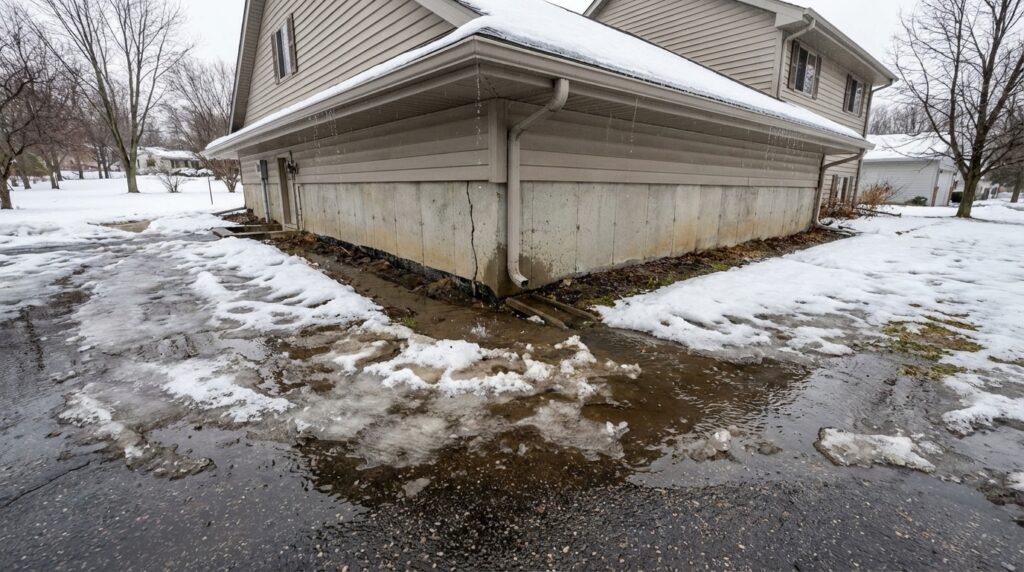
January represents a particularly vulnerable period for foundation protection across cold climates. According to the American Society of Home Inspectors (2024), 60% of foundation water damage occurs during winter thaw cycles when accumulated snow releases large volumes of meltwater into soil surrounding home foundations. Unlike gradual spring rainfall, January snowmelt creates rapid ground saturation that overwhelms basic drainage systems.
The freeze-thaw cycle creates additional structural stress. Water infiltration into foundation walls expands when temperatures drop below freezing, then contracts during warming periods. This repeated expansion generates foundation cracks measuring 1/16 inch or wider, allowing further water seepage. Soil engineer assessments from 2025 indicate that unmanaged January snowmelt increases foundation settling rates by 300% compared to properties with advanced water management systems.
Key Characteristics of Advanced Water Management Systems
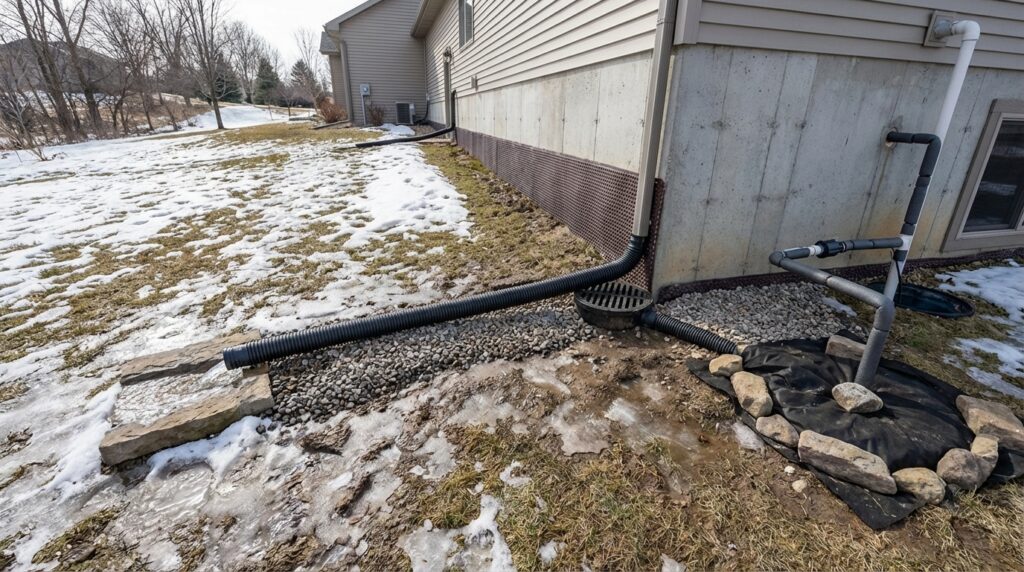
Effective winter foundation protection incorporates five essential characteristics that distinguish advanced systems from basic approaches:
1. Multi-Layer Perimeter Drainage
Advanced drainage systems combine French drains, perimeter drains, and drainage tiles installed below the frost line (typically 42-48 inches deep in northern climates). These systems feature drainage pipes with geotextile fabric wrapping to prevent soil infiltration while maintaining water flow capacity of 15-20 gallons per minute during peak meltwater events.
2. Strategic Landscape Grading
Proper slope gradient directs surface water away from foundation walls. The International Building Code (2024) requires minimum 6-inch drop over 10 feet from foundation perimeter. Advanced water management techniques for homeowners incorporate swales, rain gardens, and catch basins positioned 15-20 feet from foundations to capture and redirect snowmelt runoff.
3. Comprehensive Waterproofing Membrane Systems
Exterior waterproofing applications include spray-on or roll-on waterproofing membranes extending from footer to grade level, paired with bentonite clay panels providing secondary moisture barriers. Interior waterproofing adds hydraulic cement sealants to basement walls and vapor barriers in crawl spaces.
4. Enhanced Gutter System Infrastructure
Commercial-grade gutter systems with 6-inch channels (versus standard 5-inch) prevent overflow during rapid January thaw. Downspout extensions measuring 6-10 feet direct water to drainage channels or permeable paving areas, preventing water pooling within 20 feet of foundations.
5. Mechanical Water Removal Systems
Sump pump installations provide active water removal when passive drainage proves insufficient. According to foundation contractors surveyed in 2025, backup battery systems prevent 89% of basement flooding events during winter power outages that coincide with peak snowmelt periods.
How Advanced Water Management Works: A 5-Step Process
Implementing comprehensive foundation moisture protection follows this systematic approach:
Step 1: Professional Foundation Inspection
A structural engineer or certified home inspector conducts thermal imaging camera assessment to identify existing foundation vulnerability, moisture intrusion points, and weep hole functionality. Moisture meter readings establish baseline soil moisture content within 3 feet of foundation walls. This inspection occurs ideally in November before ground freezing, allowing December implementation before January snowmelt.
Step 2: Drainage System Design
A landscape architect or drainage specialist creates a water management plan addressing site-specific challenges including water table depth, soil water retention characteristics, and seasonal soil changes. Best drainage solutions for January snowmelt incorporate minimum two independent water routing pathways to prevent system failure if primary channels freeze.
Step 3: Installation of Perimeter Drainage Infrastructure
Foundation contractors excavate perimeter drain trenches to footer level, install drainage tiles sloped at 1/8 inch per foot toward discharge points, and backfill with washed gravel providing 40% porosity. Exterior waterproofing application occurs before backfilling, while interior waterproofing addresses basement walls accessible from interior spaces.
Step 4: Surface Water Management Implementation
Yard grading adjustments create proper slope gradients using engineered fill dirt. Downspout extensions connect to underground drainage pipes or surface channels directing water minimum 10 feet from foundations. Erosion control measures including permeable paving and ground cover plantings stabilize soil while allowing water infiltration away from foundation perimeter.
Step 5: Monitoring and Seasonal Maintenance
Dehumidifier installation in basements maintains relative humidity below 50%, preventing condensation on foundation walls. Monthly moisture meter readings during January through March track soil saturation levels, triggering supplemental drainage activation when readings exceed 30% volumetric water content within 18 inches of foundations.
Common Misconceptions About January Foundation Water Management
Myth: Basic gutters provide adequate protection from snowmelt damage.
Reality: According to foundation waterproofing specialists (2025), standard gutter systems address only 40% of water reaching foundations. Managing water runoff from melting snow requires integrated drainage networks combining surface diversion, subsurface collection, and active removal systems.
Myth: Foundation waterproofing eliminates need for drainage systems.
Reality: Waterproofing membranes prevent water penetration but do not address hydrostatic pressure buildup. Soil engineer testing demonstrates that unrelieved hydrostatic pressure from ground saturation generates 500-800 pounds per square foot against foundation walls, sufficient to cause structural foundation water damage regardless of waterproofing quality.
Myth: January snowmelt only threatens homes with basements.
Reality: Homes with crawl spaces and slab foundations face equal vulnerability. Water accumulation beneath slab foundations causes differential settling, while crawl space moisture creates conditions for microbial growth and structural wood deterioration within 72 hours of water intrusion.
Myth: Frozen ground prevents water infiltration during winter.
Reality: Frost line depth varies regionally, but temperatures above 32°F create thaw zones where meltwater infiltration occurs. The National Weather Service (2024) reports that January temperature fluctuations create freeze-thaw cycles averaging 8-12 occurrences monthly in northern U.S. climates, each cycle accelerating foundation heaving and foundation crack development.
Advanced Water Management vs. Basic Water Control
| Feature | Basic Water Control | Advanced Water Management |
|---|---|---|
| Drainage Depth | Surface level only | Below frost line (42-48 inches) |
| System Redundancy | Single drainage path | Multiple independent pathways |
| Waterproofing Coverage | Spot treatment of visible cracks | Complete exterior membrane plus interior barriers |
| Monitoring | Visual inspection only | Moisture meters, thermal imaging, continuous monitoring |
| Water Removal Capacity | Passive drainage only | Active sump pump systems with battery backup |
| Professional Design | DIY or contractor installation without engineering | Structural engineer assessment with landscape architect planning |
The distinction becomes critical during January snowmelt events. Basic systems handle typical rainfall but fail when rapid thaw releases 2-4 inches of water equivalent over 48-72 hours. Advanced foundation waterproofing systems maintain foundation health by managing water pressure management through redundant pathways capable of handling 400% normal precipitation volumes.
Practical Applications and Implementation Timeline
Homeowners should implement advanced water management using this seasonal timeline:
October-November: Assessment Phase
Schedule foundation inspection with certified home inspector or structural engineer. Obtain moisture meter baseline readings. Identify existing foundation issues including foundation leaks, block foundation deterioration, or poured concrete spalling. Review with foundation repair specialists to determine whether immediate structural repairs precede drainage improvements.
December: Installation Phase
Complete major drainage system installation before ground freezing. This includes French drain system excavation, perimeter waterproofing application, and sump pump installation. Weather permitting, adjust yard grading and install downspout extensions. Cold weather limits exterior waterproofing adhesion, so prioritize these tasks for completion by mid-December in northern climates.
January: Monitoring Phase
Conduct weekly foundation inspection during thaw periods. Check sump pump operation, clear gutter systems of ice accumulation, and verify downspout discharge points remain functional. January foundation maintenance checklist should include clearing snow accumulation exceeding 6 inches within 10 feet of foundation walls to reduce meltwater volume.
February-March: Adjustment Phase
Document system performance during peak meltwater events. Identify locations where water pooling occurs despite drainage improvements. Schedule landscape drainage enhancements including rain garden installation or swale construction for spring implementation. Address any foundation damage detected during winter monitoring.
When to Consult Foundation Protection Professionals
While homeowners can implement basic preventive foundation care measures, certain conditions require professional consultation:
- Visible foundation cracks exceeding 1/4 inch width: Structural engineer assessment determines whether cracks indicate active settling requiring foundation repair before waterproofing.
- Recurring basement flooding despite existing drainage: Foundation contractor evaluation identifies system capacity limitations or installation defects.
- Water table rise documented within 24 inches of basement floor: Soil engineer testing determines appropriate drainage tile depth and capacity requirements.
- Foundation walls showing horizontal displacement or bowing: Immediate structural engineer consultation prevents catastrophic foundation settling.
- Properties with complex grading challenges: Landscape architect design optimizes drainage planning for steep slopes, multiple drainage basins, or shared property boundaries.
According to the Foundation Repair Association (2025), professionally designed advanced water management systems cost $3,800-$12,000 depending on foundation perimeter length and soil conditions, but prevent foundation damage averaging $15,000-$45,000 in repair costs over 10-year periods.
Protecting Foundation Integrity Through Proactive Water Management
Advanced water management represents essential home maintenance for foundation protection, particularly in regions experiencing significant January snowmelt. The integration of perimeter drainage infrastructure, strategic landscape grading, comprehensive waterproofing, enhanced gutter systems, and mechanical water removal creates resilient defense against seasonal water damage. Homeowners implementing these systems before winter weather protection needs peak ensure foundation preservation and avoid costly structural water protection repairs.
The investment in drainage optimization and moisture control systems provides immediate benefits during January thaw periods while delivering long-term foundation safeguarding value. As of 2025, insurance data indicates that homes with documented advanced water management systems qualify for premium reductions averaging 8-12% on homeowner policies, recognizing reduced foundation concerns and water damage mitigation effectiveness.