
A French drain is a subsurface drainage system using a perforated pipe surrounded by gravel to redirect groundwater, whereas a catch basin is a surface water collection structure with a grate and sump that captures runoff and debris. French drains excel at managing subsurface water and preventing foundation drainage problems, while catch basins effectively collect surface water from hardscapes, downspouts, and areas prone to ponding. According to the American Society of Civil Engineers (2024), combining both systems provides comprehensive water management for properties with multiple drainage problems.
What Are the Main Differences Between French Drains and Catch Basins?
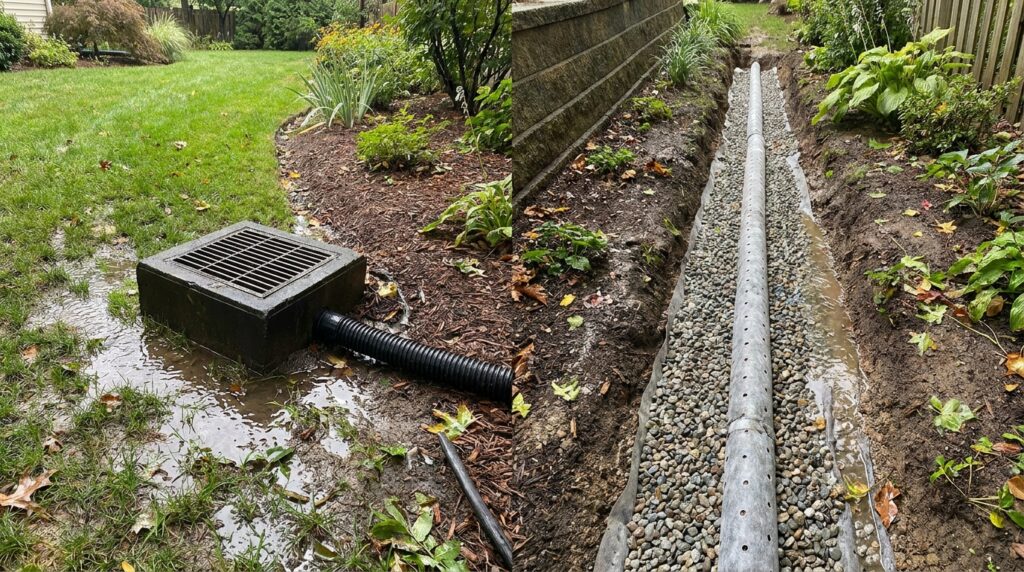
The fundamental distinction between a French drain and a catch basin lies in their drainage functionality and water collection methods. French drains operate as underground drainage systems that intercept and redirect subsurface water through continuous trenching and drainage pipe systems. Catch basins function as drainage inlets that capture surface water at specific collection points before channeling it through connected drainage pipes.
| Feature | French Drain | Catch Basin |
|---|---|---|
| Primary Function | Subsurface drainage and groundwater management | Surface water collection and sediment trap |
| Installation Depth | 18-24 inches typical, up to 4 feet for footer drain applications | 12-36 inches depending on drainage capacity requirements |
| Drainage Components | Perforated pipe, gravel bed, geotextile fabric, landscape fabric | Drainage grate, sump basin, outlet pipe, sediment trap |
| Water Type Managed | Groundwater, water table, subsurface water infiltration | Surface water, precipitation runoff, standing water |
| Typical Applications | Foundation drainage, basement waterproofing, soggy lawn correction | Driveway drainage, patio drainage, downspout water collection |
| Material Costs | $8-15 per linear foot for materials | $150-400 per unit for residential drain box |
| Maintenance Frequency | Every 3-5 years for inspection | Every 6-12 months for sediment removal |
How Does a French Drain Work?
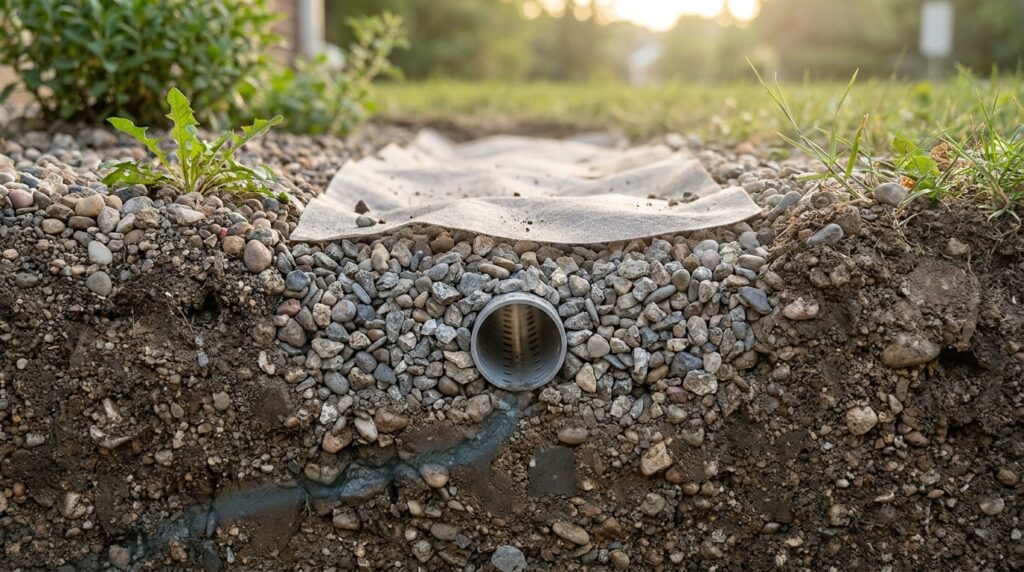
A French drain removes excess water through gravity-driven water conveyance within a drainage trench filled with drainage aggregate. The drainage mechanism begins when water infiltration occurs in waterlogged soil. Groundwater flows into the drainage rock surrounding the perforated drainage pipe, which captures and redirects water away from problem areas.
The drainage configuration typically includes a four-inch drain pipe or six-inch drain pipe depending on drainage capacity needs. According to drainage engineers at the University of Minnesota Extension (2023), corrugated drainage tubing increases water flow by 30% compared to solid drainage pipe in similar conditions. The perforated pipe features weep holes spaced 6-8 inches apart along the bottom half of the pipe.
French Drain Components and Installation
A properly designed French drain installation requires specific drainage components arranged in a precise drainage structure. The excavation process involves trenching to depths of 18-24 inches for yard drainage or up to 48 inches for foundation drain applications. The trench width typically measures 12-18 inches to accommodate adequate drainage rock.
Installation begins with landscape fabric placement along the trench bottom and sides. This non-woven fabric prevents soil infiltration while allowing water conveyance. Contractors then add a 3-inch layer of three-quarter-inch stone or pea gravel. The PVC pipe or corrugated pipe sits atop this gravel bed with perforations facing downward. Additional crushed stone surrounds the pipe to within 4 inches of ground level. Filter fabric wraps over the aggregate before backfill completes the drainage installation.
French Drain Applications
French drain systems excel in specific drainage applications where subsurface water control is paramount. Foundation drainage represents the most critical application, where a footer drain or footing drain intercepts water before it reaches basement walls. According to the National Association of Home Builders (2024), proper perimeter drainage reduces basement waterproofing failures by 78%.
A curtain drain or interceptor drain diverts water flowing downhill toward structures. This drainage tile system installs perpendicular to water flow, creating an underground barrier. Landscape drainage applications address soggy lawns and poor drainage in garden beds. The weeping tile or drain tile directs water to appropriate discharge points, eliminating water accumulation in planting areas.
How Does a Catch Basin Function?
A catch basin collects surface water through a drainage grate mounted at ground level above a box drain chamber. Storm water enters through the grated drain, flows into the sump basin below, and exits through an outlet pipe positioned 6-12 inches above the basin floor. This elevation difference creates a sediment trap where debris settles, preventing clogging in downstream drainage pipes.
The drainage inlet operates on simple hydraulic principles. According to the American Society of Landscape Architects (2023), a standard storm inlet with a 12-inch square drainage grate can capture 15 gallons per minute during typical precipitation events. The storm water drain mechanism works continuously without power, relying on positive drainage and gravity for water discharge.
Catch Basin Components and Structure
A typical catch basin installation includes several interconnected drainage components designed for surface water management. The storm drain grate provides the visible drainage inlet while filtering large debris. Residential applications commonly use 9-inch by 9-inch or 12-inch by 12-inch gutter drains, whereas commercial installations may require 24-inch by 24-inch curb inlet grates.
Below the grate, the sump basin or drain box provides water retention capacity and sediment collection. Standard residential sump basins measure 12-18 inches deep with 12-inch square or 18-inch round configurations. The outlet connects to rigid drain pipe or flexible drain pipe that conveys collected water to appropriate discharge locations. Professional drainage contractors typically install a storm water drain outlet 6-8 inches above the basin floor to maintain sediment trap functionality.
Catch Basin Applications
Catch basins provide optimal drainage solutions for hardscape drainage and concentrated surface water collection. Driveway drainage applications position storm inlets at low points where water pools. The drainage grate captures runoff before it flows toward garage foundations or creates icing hazards in winter.
Downspout drainage represents another common catch basin application. Rather than discharging roof drainage directly onto soil, a downspout drain connects to a catch basin inlet. This configuration prevents erosion control problems and directs precipitation away from foundation walls. According to the International Association of Certified Home Inspectors (2024), proper downspout water management reduces foundation settlement by 45%.
Patio drainage and landscape drainage needs often benefit from strategically placed yard drains. A grated drain installed at the patio’s low point collects standing water that would otherwise damage paver joints or create slip hazards. Garden drainage applications use catch basins to collect water from mulched areas where runoff concentrates.
When Should You Use a French Drain Instead of a Catch Basin?
Choose a French drain when addressing subsurface drainage needs, waterlogged soil conditions, or continuous water table management. French drains excel at intercepting groundwater before it reaches structures. The subsurface water control provided by perimeter drainage prevents moisture control problems in basements and crawl spaces.
Specific scenarios requiring French drain installation include foundation waterproofing, where a footer drain protects below-grade structures. According to hydraulic engineers at Ohio State University (2023), curtain drains reduce subsurface water infiltration by 68% in properties with high water tables. Properties with consistently soggy lawns benefit from landscape drain tile systems that lower local groundwater levels by 12-18 inches.
When Should You Install a Catch Basin Instead of a French Drain?
Install a catch basin when managing concentrated surface water, rapid runoff, or debris-laden storm water. Catch basins provide superior drainage effectiveness for hardscape applications where water accumulates at predictable locations. The storm inlet captures ponding water before it spreads across larger areas.
Optimal catch basin applications include areas receiving downspout discharge, driveway low points, and patio edges. Properties with steep slopes benefit from strategically positioned storm drains that interrupt runoff velocity. Commercial sites with extensive impervious surfaces require multiple drainage inlets to manage precipitation from parking lots and walkways. A landscape architect typically specifies catch basin spacing at 50-100 foot intervals for continuous curb applications.
Can You Combine French Drains and Catch Basins?
Combining French drains and catch basins creates comprehensive drainage systems addressing both surface and subsurface water. This integrated approach provides superior water management for properties with complex drainage problems. According to the National Association of Landscape Professionals (2024), combined drainage system design reduces overall water damage risk by 82% compared to single-system approaches.
A typical configuration connects downspout drains to catch basins, which then discharge into French drain systems. The catch basin feeds into a French drain by routing the outlet pipe into the perforated drainage pipe trench. This design captures immediate surface water while providing subsurface water conveyance capacity. The French drain emptying into a catch basin represents an alternative configuration where subsurface drainage concentrates at collection points before final discharge.
Combined System Installation Considerations
Installing French drains and catch basins together requires careful drainage planning to ensure proper water flow and system capacity. The drainage design must account for peak water discharge from both surface and subsurface sources. Contractors typically size the French drain pipe diameter based on combined water volume, often requiring six-inch drain pipe rather than standard four-inch options.
Connection points between systems require special attention to drainage configuration. When adding a catch basin to an existing French drain, excavation must not compromise the established drainage rock bed. Professional installation ensures the catch basin outlet aligns with the French drain trench at appropriate depths. The drainage structure should maintain continuous positive drainage without low spots that trap water.
What Are the Cost Differences Between French Drains and Catch Basins?
French drain installation costs typically range from $25-50 per linear foot for professional drainage excavation and materials, according to HomeAdvisor (2024). A typical 50-foot French drain system costs $1,250-2,500 depending on depth, pipe type, and site conditions. DIY drainage projects reduce costs to $8-15 per linear foot for materials including corrugated drainage tubing, drainage rock, and filter fabric.
Catch basin installation costs average $400-1,200 per unit for residential applications. This includes the drain box ($150-400), drainage grate ($50-150), excavation, and connection to drainage pipes. Commercial storm inlet installations range from $1,500-5,000 depending on size and depth requirements. Material costs for DIY catch basin projects range from $200-500 per unit excluding pipe connections.
Long-Term Cost Considerations
Drainage system cost analysis must include maintenance and longevity factors. French drains typically require minimal maintenance, with inspection and flushing every 3-5 years costing $150-300. However, clogged filter fabric may require complete excavation and replacement after 15-20 years, costing $30-50 per linear foot.
Catch basin maintenance involves sediment removal every 6-12 months, costing $75-150 per cleaning for professional service. DIY maintenance requires only basic tools and 30 minutes per basin. Drainage grate replacement costs $50-150 every 10-15 years. According to drainage contractors surveyed in 2024, catch basins typically outlast French drains by 5-10 years when properly maintained, with expected lifespans of 30-40 years versus 20-30 years respectively.
How Do Maintenance Requirements Differ?
French drain maintenance primarily involves preventing sediment buildup within the perforated pipe and drainage rock. Annual inspection checks for proper water flow at discharge points. Every 3-5 years, contractors recommend flushing the drainage tile with high-pressure water to remove accumulated sediment. Signs requiring immediate attention include water seepage near the drain location or soggy conditions that previously remained dry.
Catch basin maintenance requires more frequent attention but simpler procedures. Every 6-12 months, remove the drainage grate and extract accumulated sediment from the sump basin. A wet-dry vacuum or bucket easily removes debris. After heavy storms, check for clogging at the storm water drain outlet. Professional drainage repair services recommend annual inspection of the drainage structure for cracks or settlement.
Which Drainage Solution Is Right for Your Property?
Choose a French drain if your property experiences: waterlogged soil conditions, wet basements despite proper grading, crawl space moisture problems, or consistently soggy areas in your lawn. French drains provide optimal groundwater management and subsurface water control for these conditions. Properties with high water tables or perimeter drainage needs benefit most from weeping tile installations.
Choose a catch basin if your property has: concentrated ponding at specific locations, downspout discharge onto soil, driveway low points collecting water, or patio areas with standing water. Catch basins excel at surface water management where runoff concentrates at predictable points. Hardscape drainage applications typically require storm drain inlets for effective water collection.
Choose both systems if your property exhibits combined drainage challenges. Installing French drains and catch basins together addresses comprehensive water management needs. For expert evaluation of your specific drainage problems and customized solutions, visit French drain vs catch basin professionals who can assess both surface and subsurface water issues.
Frequently Asked Questions
Can a French drain work without a catch basin?
Yes, French drains function independently without catch basins for subsurface drainage applications. The perforated pipe collects groundwater directly through the surrounding gravel bed without requiring surface inlets. However, adding catch basins to French drain systems improves surface water capture at downspouts or low points.
How deep should a French drain be compared to a catch basin?
French drains typically install 18-24 inches deep for yard drainage and up to 48 inches for foundation drainage. Catch basins generally require 12-36 inches depth depending on outlet pipe elevation requirements. The catch basin sump must extend below the outlet pipe elevation to provide sediment trap functionality.
Do I need a permit for French drain or catch basin installation?
Permit requirements vary by municipality. Most jurisdictions require permits for drainage systems connecting to storm sewers or affecting property boundaries. Simple French drain installations for yard drainage often proceed without permits, whereas catch basin connections to municipal storm drains typically require approval. Contact local building departments before beginning drainage excavation.
What size pipe should I use for French drains versus catch basin connections?
Standard French drains use four-inch drain pipe for most residential applications, with six-inch drain pipe for high-capacity needs. Catch basin outlets typically connect to four-inch pipes for single basin installations or six-inch pipes when serving multiple drainage inlets. The pipe type selection between rigid drain pipe and flexible drain pipe depends on depth and routing requirements.