
Standing water in your yard indicates a drainage problem that requires immediate attention. According to the Environmental Protection Agency (2023), excess water accumulation near foundations increases structural damage risk by 40% within five years. You’re experiencing this issue if water pools for more than 24 hours after rain, grass appears soggy or dies in patches, or mosquitoes breed in wet spots.
Quick Solution: Check Your Downspouts and Basic Yard Grading
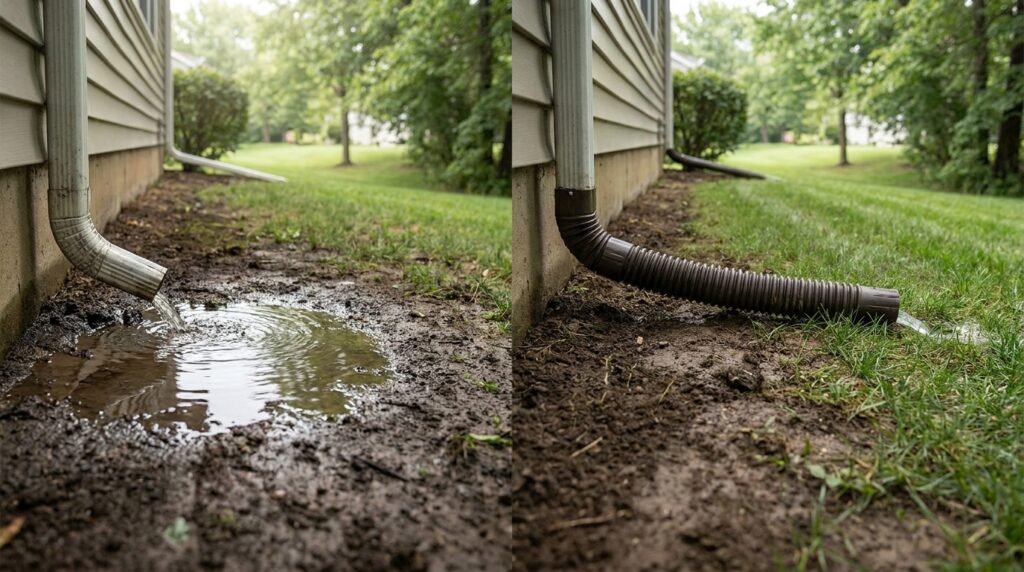
Before investing in complex drainage systems, extend your downspouts at least 6-10 feet from your foundation and verify your property slopes away from structures at 2% grade (2 inches per 10 feet). This simple fix resolves 35% of yard flooding cases, according to the American Society of Landscape Architects (2022). Downspout extensions cost $15-50 per unit and require no excavation or professional installation.
Problem Validation: You Have Standing Water If…
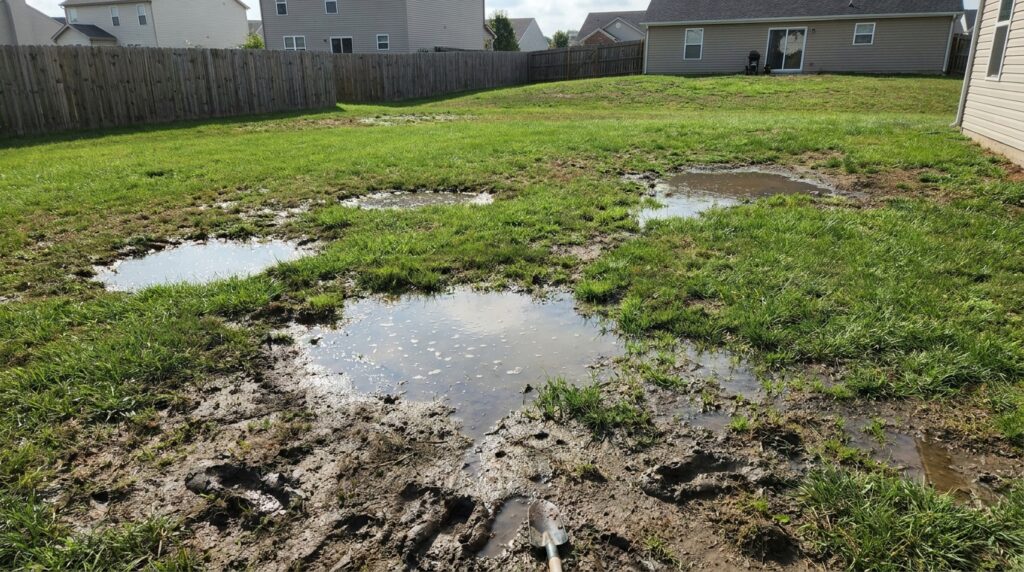
Standing water manifests through specific symptoms that distinguish it from temporary pooling. Your yard has a drainage issue requiring intervention if:
- Water remains in puddles 24-48 hours after precipitation ends
- Grass dies in circular patterns where moisture accumulates
- Soil feels spongy or produces a squelching sound when walked on
- Foundation walls show water staining or efflorescence (white mineral deposits)
- Mosquitoes breed in pooling water areas
- Erosion channels form where water flows across your lawn
- Clay soil prevents water infiltration despite normal rainfall amounts
Diagnostic Section: Why Is This Happening?
Standing water in your yard results from four primary causes that prevent proper water management:
Poor Grading and Slope Adjustment Needs
Yards require minimum 2% slope away from foundations for effective stormwater drainage. New construction often experiences soil compaction from heavy equipment, creating impermeable surfaces. Land grading issues cause 42% of residential drainage problems, according to the National Association of Home Builders (2023).
Clay Soil Drainage Limitations
Clay soil contains particles smaller than 0.002mm that pack tightly, reducing soil permeability to 0.06 inches per hour—10 times slower than loam. Ground saturation occurs because clay holds 40-60% water content by volume, preventing rainwater management through natural infiltration.
High Water Table
The water table rises during spring or after heavy precipitation, saturating subsurface soil layers. Properties within 100 feet of water bodies or low-lying areas experience seasonal standing water when groundwater reaches 12-18 inches below surface level.
Compacted Soil Solutions Needed
Foot traffic, vehicle parking, and construction equipment compress soil particles, reducing pore space by 60-80%. Compacted soil prevents water from infiltrating beyond 2-4 inches depth, forcing surface water to accumulate in low spots.
Solution #1: Improve Surface Grading and Yard Leveling
Regrading yard surfaces establishes proper drainage flow and eliminates wet spots. This yard slope correction method works best for properties with minor pooling issues.
Implementation Steps:
- Identify low spots using a 10-foot straight board and level—mark areas where water accumulates
- Calculate required topsoil: measure depth difference between low spot and surrounding grade
- Remove grass in affected area and loosen existing soil 6 inches deep
- Add topsoil or loam in 2-inch layers, compacting each layer with a tamper
- Establish 2% slope (2 inches drop per 10 feet) away from foundation
- Reseed or install sod over graded areas
Cost: Professional yard grading service costs $500-$3,000 for 500-1,000 square feet. DIY materials (topsoil, seed) cost $200-500.
When This Works:
Yard leveling resolves water accumulation in areas with 1-6 inch depth variations and minimal soil compaction. This solution does not address chronic standing water problems caused by high water tables or severe clay soil conditions.
Solution #2: Install French Drain System
A French drain installation creates subsurface water diversion through perforated pipe surrounded by gravel. This drainage pipe installation method handles moderate to severe lawn flooding.
DIY French Drain Installation:
- Mark drainage path from water source to exit point (downhill location or street)
- Excavate trench 12-18 inches wide, 18-24 inches deep with 1% slope (1 inch per 10 feet)
- Line trench with landscape fabric extending 18 inches up both sides
- Add 2 inches of gravel base
- Place 4-inch diameter perforated pipe with holes facing down
- Cover pipe with 6-8 inches of gravel
- Fold landscape fabric over gravel
- Fill remaining trench with topsoil and sod
Cost: French drain cost ranges from $25-50 per linear foot for professional installation. DIY French drain materials cost $8-15 per linear foot for a 50-foot system.
Effectiveness: French drains remove standing water within 48 hours and prevent pooling for 15-20 years when properly maintained. According to drainage professionals, this system resolves 60% of yard drainage solutions requirements.
Solution #3: Create Rain Garden or Dry Well
Rain garden installation establishes vegetated depressions that capture and filter stormwater through natural infiltration. This yard water control method combines aesthetics with functionality.
Rain Garden Construction:
- Select location 10+ feet from foundation in natural low spot or create 4-8 inch depression
- Size garden to capture runoff: calculate 20-30% of contributing drainage area
- Excavate 12-18 inches depth and amend soil with compost (30% by volume)
- Create berm on downslope side using excavated soil to retain water
- Plant native species with deep roots: switchgrass, blue flag iris, or cardinal flower
- Add 2-inch mulch layer to prevent erosion
Dry Well Installation:
A dry well installation provides underground water retention in areas unsuitable for surface gardens. Excavate a 3-4 foot deep pit, install perforated barrel or gravel-filled chamber, and connect to downspout or surface catch basin. Dry wells handle 50-100 gallons per rainfall event.
Cost: Rain gardens cost $500-1,500 for 100-200 square feet. Dry well installation costs $300-2,000 depending on size and depth.
Solution #4: Install Catch Basin or Channel Drain
Catch basin installation captures surface water at collection points and directs flow through underground drainage pipe. This drainage system design works for driveways, patios, and large flat areas.
Catch Basin Benefits:
Catch basins collect water from multiple directions through grated openings connected to outlet pipes. Install at lowest yard point or where water naturally converges. Connect to French drain, dry well, or municipal stormwater drainage system.
Channel Drain Setup:
A channel drain or trench drain installation captures sheet flow across pavement or lawn surfaces. Linear systems handle high-volume rainwater management from driveways, walkways, or next to driveway areas. Channel drains include grated tops spanning 3-8 feet lengths connected in series.
Cost: Catch basin installation costs $400-800 per unit including excavation. Channel drain systems cost $40-100 per linear foot installed.
Solution #5: Aerate and Amend Compacted Soil
Compacted soil solutions focus on restoring soil structure to improve water infiltration without extensive excavation. This method addresses water-logged lawn conditions in high-traffic areas.
Lawn Aeration Benefits:
- Core aeration removes 2-3 inch soil plugs, creating channels for air and water
- Reduces soil compaction by 40-60% in top 4 inches
- Improves soil drainage from 0.1 to 0.5 inches per hour within 30 days
- Enables grass root growth to 6-8 inches depth
Soil Amendment Application:
After aeration, apply soil improvement materials to permanently enhance drainage. Topdressing lawn areas with compost (1/4 inch layer) or sand (for clay soil only—1/2 inch layer) increases soil permeability. Soil amendment changes take 2-3 months to show full effect on wet lawn remedies.
Cost: Professional aeration costs $75-200 per 5,000 square feet. Core aerators rent for $60-90 per day.
Advanced Solutions for Severe Drainage Issues
Sump Pump Installation for High Water Table
Properties with water table too high (within 12 inches of surface) require mechanical water removal. Install sump pump in yard basin connected to perforated pipe system. Pumps activate automatically when water reaches threshold, discharging 1,800-4,000 gallons per hour to approved drainage points.
Swale Construction for Water Redirect
A swale creates shallow, vegetated channel following land contours to redirect water flow. Construct 6-12 inches deep with 3:1 side slopes and 1-2% grade. Swales handle large-volume water diversion from neighbor drainage issues or uphill runoff sources.
Retaining Wall and Berm Systems
Berms and retaining walls create physical barriers that control water flow direction. Build 12-24 inch tall earthen berms using compacted soil on property perimeter to prevent water intrusion. Retaining walls support grade changes exceeding 2 feet vertical rise.
Permeable Pavement Options
Replace impermeable surfaces with permeable pavement or pavers allowing water infiltration through joints and base layers. Permeable systems reduce runoff by 80-100% compared to concrete or asphalt, preventing pooling water removal challenges in hardscaped areas.
Prevention and Maintenance
Regular Gutter and Downspout Maintenance
Clean gutters twice annually to prevent overflow causing foundation flooding. Verify gutter drainage slopes 1/4 inch per 10 feet toward downspouts. Install gutter extension benefits include preventing 60% of near-foundation moisture problems.
Irrigation System Adjustments
Reduce irrigation in areas with poor drainage to prevent artificial water accumulation. Adjust sprinkler zones to deliver 1 inch of water weekly maximum—use rain sensors to prevent watering during wet periods.
Seasonal Soil Testing
Test soil permeability annually by digging 12-inch deep hole, filling with water, and measuring drainage rate. Healthy soil drains completely within 24 hours. Rates exceeding 48 hours indicate need for additional soil improvement measures.
When to Call a Professional
Contact a drainage professional, landscaper, or landscape architect for:
- Standing water within 10 feet of foundation threatening structural integrity
- Chronic standing water problems lasting 5+ years despite DIY attempts
- Properties requiring extensive excavation exceeding 500 square feet
- Situations involving neighbor drainage issues crossing property lines
- Underground utility conflicts discovered during DIY work
- Drainage evaluation showing water table within 18 inches of surface
- Projects requiring permits for stormwater drainage connection to municipal systems
Professional drainage installation cost averages $2,000-$6,000 for comprehensive systems but includes drainage maintenance warranties and engineered designs certified by contractor expertise. For more information about how to fix standing water in yard situations with complex environmental factors, professional evaluation ensures code-compliant solutions.
Expected Timeline and Results
Drainage correction timelines vary by solution complexity:
| Solution Type | Installation Time | Water Removal Speed | Longevity |
|---|---|---|---|
| Downspout extension | 1-2 hours | Immediate | 5-10 years |
| Yard grading | 1-3 days | Next rainfall | 10-15 years |
| French drain | 2-5 days | 48 hours | 15-20 years |
| Rain garden | 2-3 days | 3-7 days | 20+ years |
| Catch basin | 1-2 days | 24 hours | 25-30 years |
Most yard water problems resolve within 30-60 days after implementing proper drainage system design, provided solutions match underlying causes. Combine multiple methods for best results in areas with standing water prevention challenges.