
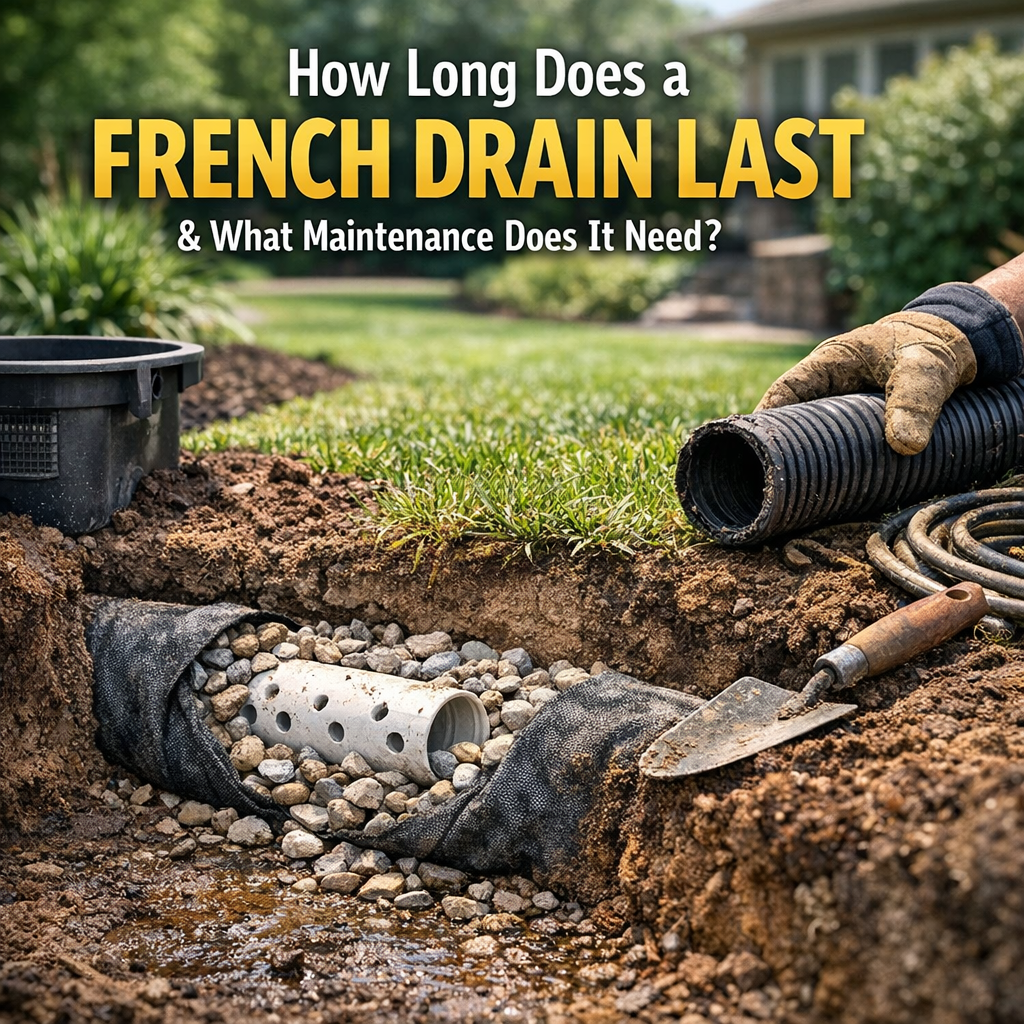
A properly installed French drain lasts 30 to 40 years on average, with a potential lifespan ranging from 20 to 50 years depending on installation quality, soil conditions, and maintenance. According to drainage system studies (2024), regular maintenance extends French drain durability by 40% compared to neglected systems. This step-by-step guide provides a comprehensive maintenance schedule to maximize your drainage system longevity.
Before You Begin: Prerequisites
- Skill Level: Beginner to Intermediate
- Time Required: 2-4 hours for annual maintenance
- Tools Needed: Garden hose, drain camera (optional), pressure washer, inspection mirror, flashlight, drain snake
- Safety Equipment: Gloves, safety glasses, waterproof boots
- Prerequisites: Knowledge of your French drain location and outlet placement
Understanding French Drain Components and Their Lifespan
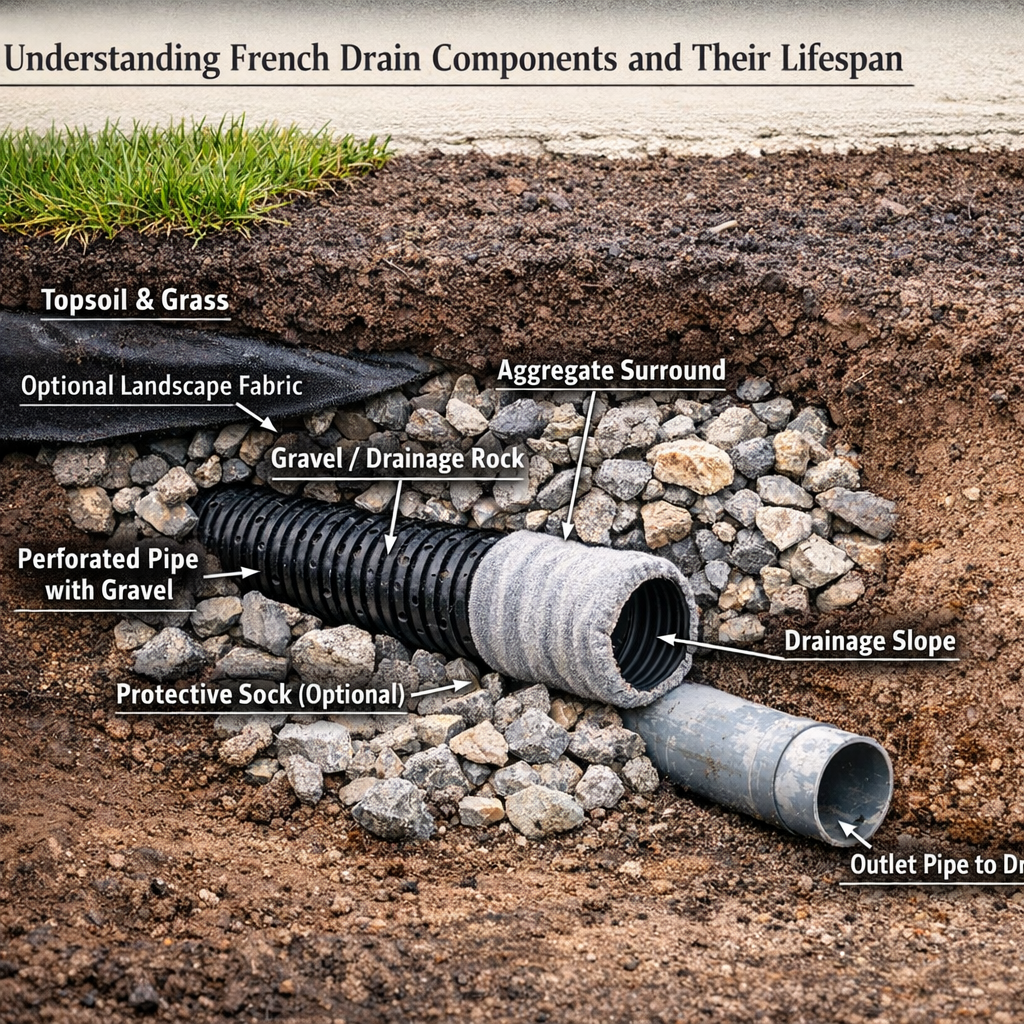
A French drain consists of three primary components that determine the system’s expected lifespan. The perforated pipe serves as the core drainage conduit, with PVC pipe lasting 50+ years and corrugated pipe lasting 20-30 years. The drainage gravel or crushed stone surrounding the pipe provides filtration and maintains water flow capacity for the system’s entire life when properly protected. The geotextile fabric (also called filter fabric or landscape fabric) prevents sediment accumulation and typically lasts 10-20 years before requiring replacement.
Henry Flagg French developed the subsurface drainage concept in 1859 for agricultural drainage. Modern applications extend to foundation waterproofing, basement moisture control, and yard drainage solutions. Installation quality directly impacts french drain durability, with proper slope gradient (1% minimum) and appropriate gravel size selection being critical factors affecting french drain longevity.
Factors That Determine French Drain Lifespan
Soil Type Considerations
Clay soil drainage poses the greatest challenge to french drain lifespan because fine particles migrate through filter fabric, causing clogging over time. Sandy soil benefits drainage effectiveness by allowing better water infiltration with minimal sediment transport. According to civil engineer assessments (2023), french drain lifespan in clay soil averages 20-25 years, while sandy soil installations often exceed 40 years.
Installation Depth and Pipe Material Durability
How long do perforated pipes last underground depends on material choice and burial depth. PVC pipe lifespan in french drain applications reaches 50-75 years because the material resists root intrusion and chemical degradation. How long do corrugated pipes last in french drains typically ranges from 20-30 years, with earlier failure common in areas with tree proximity concerns.
Root Intrusion and Vegetation Impact
Tree roots affect french drain lifespan by penetrating perforated pipe openings and clogging the gravel trench system. Installing a root barrier during construction and maintaining 10-15 feet distance from large trees prevents this issue. Vegetation management around the drain field extends system longevity by reducing root pressure on underground drainage pipe.
Step-by-Step French Drain Maintenance Guide
Step 1: Conduct Seasonal Inspection (Every 6 Months)
Perform french drain inspection frequency recommendations twice yearly—spring and fall. Examine the outlet pipe for water flow during rain events. Check for signs of french drain deterioration including slow drainage, water pooling solutions needed in previously dry areas, or moisture damage prevention failures near your foundation. This inspection frequency recommendations protocol identifies problems before major french drain repair becomes necessary.
Step 2: Clean the Outlet and Catch Basin (Twice Yearly)
Remove debris, leaves, and sediment from the outlet pipe opening. Flush the outlet with a garden hose to ensure unobstructed flow. If your system includes a catch basin or inspection port, remove the cover and extract accumulated silt and debris. This outlet maintenance requirement takes 30-45 minutes and prevents blockage prevention failures that reduce drain capacity.
Step 3: Flush the Drainage System (Annually)
How to flush french drain system properly involves inserting a garden hose into the inspection port or outlet and running water backward through the pipe. Continue flushing for 10-15 minutes or until water runs clear. This french drain cleaning method removes sediment buildup and verifies structural soundness. For stubborn clogs, french drain jetting service frequency should be every 3-5 years using professional hydro-jetting equipment.
Step 4: Inspect Filter Fabric and Gravel (Every 3 Years)
Expose a small section of the trench to examine the geotextile fabric condition. How long does landscape fabric last in french drain installations depends on soil type—typically 10-20 years. Signs requiring fabric replacement include visible tears, excessive sediment passing through, or material deterioration. Gravel cleaning rarely becomes necessary with intact filter fabric.
Step 5: Perform Camera Inspection (Every 5-10 Years)
Camera inspection for french drain maintenance identifies internal pipe damage, root infiltration, or collapsed sections without excavation. Professional drainage contractor services typically charge $200-400 for this diagnostic procedure. This preventive measure detects issues requiring french drain repair versus replacement decision before complete system failure occurs.
French Drain Maintenance Schedule Recommendations
| Frequency | Maintenance Task | Time Required |
|---|---|---|
| Semi-Annual | Visual inspection, outlet cleaning, gutter maintenance | 1-2 hours |
| Annual | System flushing, downspout care, grade maintenance | 2-3 hours |
| Every 3 Years | Fabric inspection, root removal if needed | 3-4 hours |
| Every 5-10 Years | Professional camera inspection, comprehensive assessment | 2-3 hours |
This seasonal french drain maintenance checklist optimizes performance maintenance while minimizing annual french drain inspection cost. French drain maintenance cost per year averages $150-300 for DIY french drain maintenance steps, or $400-800 for professional french drain maintenance service contracts.
Troubleshooting Common French Drain Problems
Problem: Slow Drainage or Water Backup
If water drains slowly or backs up during heavy rain → Do: Flush the system using a pressure washer through the inspection port. Check the outlet for obstructions. If the problem persists, perform a camera inspection to identify internal clogging or pipe damage requiring professional drain cleaning methods.
Problem: Water Pooling Near Foundation
If water accumulates near your basement or crawl space despite having a French drain → Do: Verify the slope gradient maintains 1% minimum grade toward the outlet. Check if soil compaction avoidance practices were followed during landscaping. Examine whether hydrostatic pressure exceeds the drain capacity, requiring supplemental solutions like a sump pump installation. For persistent issues, review our guide on what are the signs of poor exterior drainage around your home.
Problem: Sediment Buildup in Inspection Port
If you find excessive sediment during inspection → Do: Implement preventing french drain sediment buildup measures by checking the filter fabric integrity. Excessive silt indicates fabric failure or improper installation. Consider installing a cleanout with easier access for regular sediment flushing.
Problem: Root Intrusion Evidence
If you observe tree root fragments in the outlet or reduced flow → Do: Apply french drain root intrusion prevention by cutting roots with a mechanical drain snake. Install a root barrier between trees and the drain. Consider when to replace french drain system if root damage has compromised pipe integrity.
Signs Your French Drain Needs Replacement
How to tell if french drain is failing includes recognizing these indicators of drainage system failure:
- Persistent foundation waterproofing failures despite maintenance and repairs
- Pipe collapse or structural damage revealed by camera inspection
- Complete clog removal impossibility after professional drain cleaning attempts
- System age exceeding 40 years with original corrugated pipe installation
- Recurring water damage to basement, crawl space, or retaining wall areas
- Soil erosion patterns indicating underground pipe failure
- Sump pump overwork compensating for French drain inadequacy
Average lifespan of french drain system considerations suggest replacement when repair costs exceed 50% of new installation expenses. Typical french drain warranty period for new systems ranges from 2-5 years for workmanship and 10-25 years for materials.
Best Practices for French Drain Maintenance
Extending french drain life expectancy requires following these optimal function protocols:
- Maintain proper surface drainage: Ensure grade maintenance directs water away from the drain area, reducing system load
- Coordinate with landscape maintenance impact: Avoid heavy equipment over the drain field to prevent soil compaction and pipe damage
- Practice preventive measures: Install gutter guards and maintain downspout connections to reduce debris entering the system
- Document maintenance activities: Keep records of cleaning schedule adherence and inspection findings
- Address issues promptly: Implement clog prevention strategies at the first sign of reduced drainage effectiveness
- Consider professional service: Evaluate if a french drain maintenance contract worth it based on system complexity and accessibility
Understanding French drain lifespan and maintenance requirements protects your investment in subsurface water management infrastructure.
Next Steps: Protecting Your Investment
After implementing this comprehensive maintenance program, consider these additional actions to ensure system preservation:
- Schedule a professional inspection if your system is over 15 years old or has no maintenance history
- Install inspection ports if not already present, providing easier access for routine maintenance
- Develop a landscaper partnership with professionals who understand drainage system protection during renovation work
- Create a maintenance calendar with reminders for seasonal care activities
- Budget for eventual replacement by setting aside $50-100 annually toward future system renewal
Proper french drain maintenance for homeowners extends drainage longevity, protects foundation integrity, and prevents costly water damage. By following this guide, you maximize how long does a french drain last before replacement becomes necessary—potentially achieving or exceeding the 40-year benchmark for well-maintained systems. If your existing system isn’t hitting that mark, our team handles french drain installation Indianapolis homeowners can rely on for a properly engineered replacement.