
A wet crawl space in fall and winter is a condition where groundwater, rainwater, or condensation accumulates beneath a home due to seasonal weather changes, poor drainage, and rising water tables. This moisture intrusion leads to standing water, high humidity levels, and long-term structural damage if left untreated. According to the U.S. Environmental Protection Agency (EPA, 2023), excess crawl space moisture is a leading cause of indoor mold growth in residential homes.
Why Seasonal Crawl Space Moisture Matters
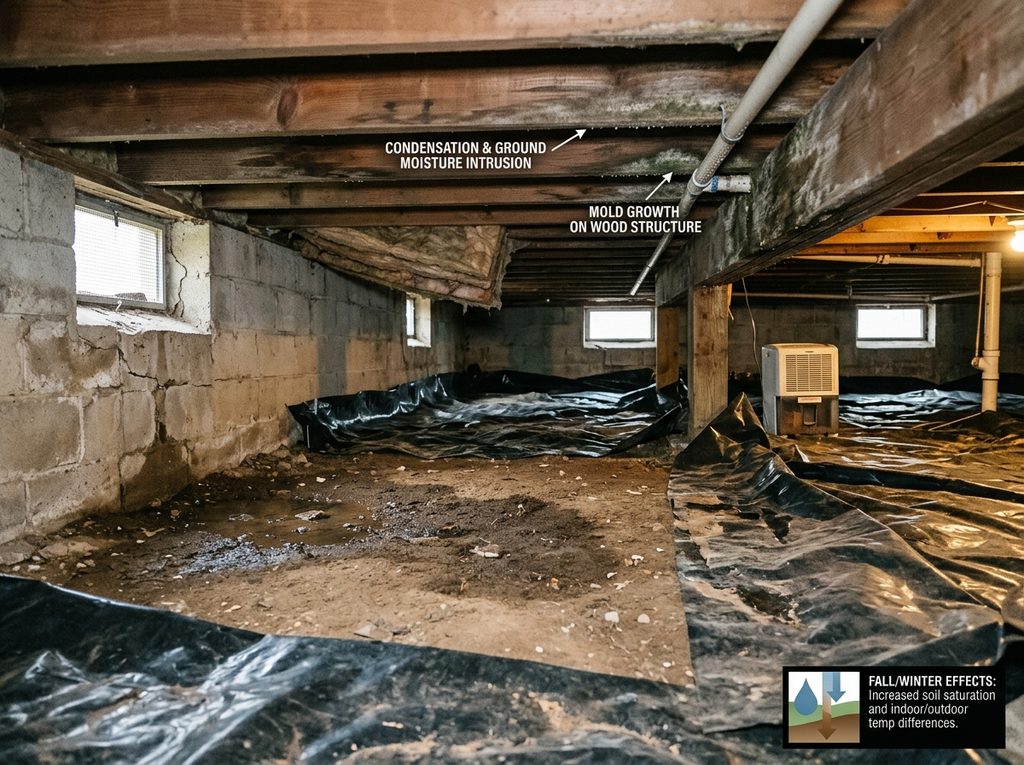
Fall and winter bring a unique combination of heavy rainfall, snow melt, and frost heave that increases water table rise around foundations. As soil becomes saturated, hydrostatic pressure pushes water through foundation cracks and into crawl spaces. Left unaddressed, this water intrusion causes wood rot, structural damage, and musty odor throughout the home. Homeowners often notice higher heating bills too, since damp insulation loses its thermal efficiency and allows air leakage.
Ignoring a wet crawl space fall and winter problem can escalate repair costs significantly. According to the National Association of Home Builders (NAHB, 2022), crawl space repair cost averages $2,000–$15,000 depending on severity, with mold remediation company services adding $500–$6,000 more.
Key Characteristics of a Wet Crawl Space
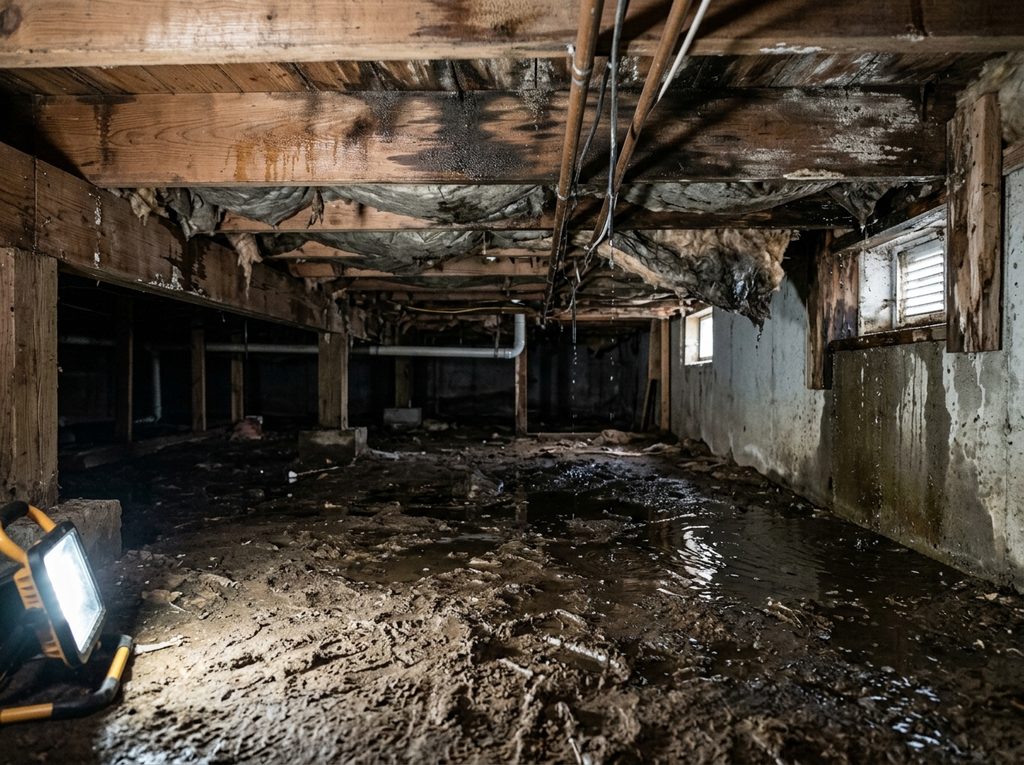
- Standing water: Visible pooling after heavy rainfall or snow melt events.
- High humidity levels: Relative humidity above 60% promotes mold growth and wood rot.
- Musty odor: A telltale sign of moisture intrusion and microbial activity.
- Condensation buildup: Water droplets forming on pipes, ductwork, or floor joists.
- Foundation cracks: Entry points for groundwater and rainwater seepage.
Signs of Crawl Space Moisture Problems in Winter
Homeowners should watch for buckling floors, peeling paint, and increased pest activity—rodents and insects are drawn to damp environments. A functioning HVAC system can also become compromised, circulating musty, humid air throughout living spaces.
How Crawl Space Flooding Works: The Seasonal Process
- Heavy rainfall saturates soil. Rainwater seepage overwhelms unimproved soil grading around the foundation.
- Groundwater and water table rise. Saturated ground pushes the water table closer to crawl space floors.
- Poor drainage redirects water inward. Without a French drain, perimeter drain, or proper exterior drainage problems solutions, water flows toward the foundation instead of away.
- Gutter system and downspout extension failures. Clogged gutters or short downspouts dump rainwater directly beside the foundation.
- Frost heave and snow melt in winter. Freezing and thawing cycles shift soil and create new foundation cracks, while melting snow adds additional moisture load.
- Condensation forms indoors. Temperature differences between crawl space vents and warm interior air cause condensation buildup on surfaces, worsening humidity control challenges.
Why Does My Crawl Space Flood Every Fall?
Fall flooding is typically driven by cumulative rainfall combined with soil that hasn’t yet frozen, allowing rapid rainwater seepage into the ground. Homes with inadequate soil grading or missing drainage matting are especially vulnerable during this transitional season.
Why Is My Crawl Space Wet After Snow Melts?
Snow melt introduces a slow, steady water source that can saturate soil for days. Combined with frost heave loosening soil structure, this creates ideal conditions for water intrusion through foundation cracks and crawl space vents.
Common Misconceptions About Wet Crawl Spaces
Myth: Crawl Space Vents Help Dry Out Moisture
Reality: Open crawl space vents often introduce more humid outdoor air, worsening condensation and mold growth. Building science research from the Department of Energy (DOE, 2021) supports sealing vents as part of crawl space encapsulation.
Myth: Crawl Space Insulation Alone Prevents Flooding
Reality: Crawl space insulation manages thermal bridging and temperature control but does not stop water intrusion. It must be paired with a vapor barrier and drainage solutions.
Myth: A Little Standing Water Isn’t a Big Deal
Reality: Even minor standing water raises humidity levels enough to trigger mold growth within 24–48 hours, according to the Centers for Disease Control and Prevention (CDC, 2022).
Wet Crawl Space vs. Wet Basement: What’s the Difference?
Unlike a wet basement, which typically involves finished living space and visible water damage to walls, a wet crawl space is often hidden and detected only through musty odor or rising energy bills. Wet basement causes and crawl space moisture issues share root causes—poor drainage, groundwater, and soil saturation—but crawl spaces require specialized access for repairs, such as installing an interior drainage system or sump pump beneath the home.
| Feature | Wet Crawl Space | Wet Basement |
|---|---|---|
| Visibility | Often hidden, low clearance | Visible, walkable space |
| Common Cause | Soil saturation, groundwater rise | Foundation water damage, wall seepage |
| Primary Fix | Vapor barrier, crawl space encapsulation | Exterior waterproofing membrane, foundation waterproofing |
| Ventilation Concern | Crawl space ventilation issues | Egress window moisture |
Practical Applications: How to Stop Water in Crawl Space During Winter
1. Improve Exterior Drainage
Correct soil grading so ground slopes away from the foundation at a minimum of 6 inches over 10 feet, per the International Residential Code (IRC, 2021). Install a downspout extension to move gutter system runoff at least 5–10 feet from the home.
2. Install a French Drain or Perimeter Drain
A French drain or perimeter drain channels groundwater away from the foundation before it reaches crawl space walls. This crawl space drainage system is often paired with drainage matting to direct water toward a sump pump.
3. Add an Interior Drainage System and Sump Pump
When exterior fixes aren’t enough, an interior drainage system paired with a sump pump collects and removes water actively during heavy rainfall or snow melt events.
4. Apply a Vapor Barrier and Pursue Crawl Space Encapsulation
Crawl space vapor barrier installation covers exposed soil, blocking rainwater seepage and reducing humidity levels. Full crawl space encapsulation benefits include mold prevention, improved indoor air quality, and energy savings by minimizing thermal bridging and air leakage.
5. Control Humidity With a Dehumidifier
A crawl space dehumidifier cost typically ranges from $1,200–$2,800 installed, but it actively maintains humidity control below the 60% threshold recommended for mold prevention.
6. Seal Foundation Cracks and Waterproof Walls
Waterproofing crawl space walls with an exterior waterproofing membrane or interior sealant addresses foundation cracks directly. This step is critical for long-term foundation waterproofing success.
7. Hire a Waterproofing Contractor for Diagnosis
A licensed waterproofing contractor can identify the specific source of moisture intrusion, whether it’s rainwater seepage, groundwater, or condensation, and recommend a tailored crawl space drainage solutions for winter months.
Best Practices for Ongoing Crawl Space Humidity Control
- Inspect crawl space vents seasonally and seal them if encapsulation is installed.
- Clean gutters twice yearly to prevent overflow near the foundation.
- Monitor humidity levels with a hygrometer; maintain readings between 30–50%.
- Schedule annual inspections with a mold remediation company if musty odor persists.
- Check HVAC system ductwork in crawl spaces for condensation buildup.
Frequently Asked Questions
What Causes Standing Water in a Crawl Space?
Standing water typically results from a combination of heavy rainfall, poor drainage, high water table, and inadequate soil grading directing water toward the foundation instead of away from it.
How Does Soil Grading Cause Wet Crawl Spaces?
Improper soil grading allows rainwater seepage to pool near the foundation rather than flow away, increasing hydrostatic pressure and pushing water through foundation cracks.
How Do Gutters Affect Crawl Space Moisture?
A malfunctioning gutter system or missing downspout extension deposits rainwater directly beside the foundation, significantly increasing water intrusion risk during fall and winter storms.
Understanding these seasonal changes and crawl space water damage patterns empowers homeowners to act before minor moisture becomes major structural damage. Addressing water intrusion early—through drainage, encapsulation, and humidity control—protects both the home’s foundation and indoor air quality year-round.