
Short answer: Central Indiana homes get wet crawl spaces because of dense clay soil, a shallow water table, and a climate that alternates between spring thaw flooding and heavy summer rainfall. Crawl space encapsulation controls moisture 60–90% more effectively than traditional ventilation, according to Building Science Corporation (2020) research on humid continental climates. Ventilation alone often worsens humidity in Indiana’s climate rather than fixing it. This distinction matters because the wrong fix can cost a homeowner thousands of dollars without solving the underlying groundwater or humidity problem.
Why Is My Crawl Space Always Wet in Indiana?
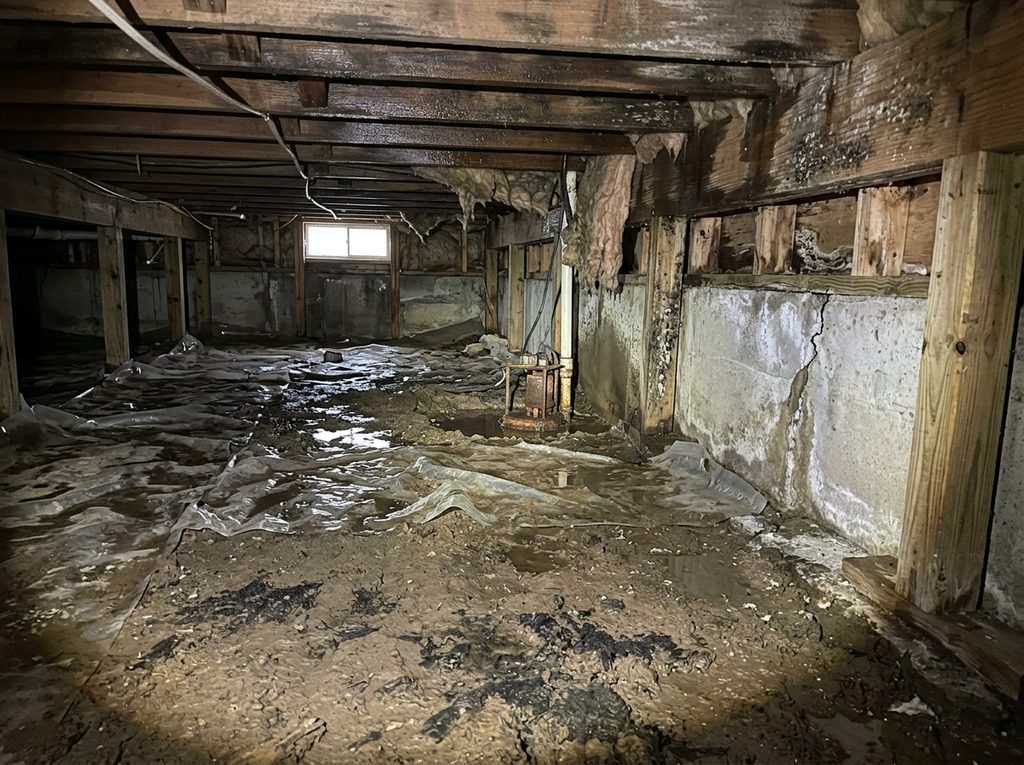
Three regional factors combine to create chronic crawl space moisture across Indianapolis and the surrounding counties, including Hamilton, Hendricks, Johnson, and Marion counties. Understanding them is the first step in choosing between encapsulation and ventilation, because each cause responds differently to each repair method.
How Clay Soil Affects Crawl Space Moisture in Indiana
Central Indiana sits on heavy clay soil with low permeability, sometimes rated below 0.01 inches per hour of water infiltration. Clay soil water retention keeps water near the foundation instead of letting it drain away, unlike sandy or loamy soils that disperse moisture quickly. Unlike sandy soils found farther south near the Hoosier National Forest region, Indiana’s clay-dominant soil composition traps groundwater against foundation walls, driving moisture through concrete via capillary action. Over time, this capillary moisture migration can raise relative humidity inside a crawl space to 80% or higher, even on dry days, creating conditions favorable to mold and wood rot.
Why Is Indiana’s Water Table Causing Wet Crawl Spaces?
Many Central Indiana neighborhoods sit in high water table areas, with groundwater levels within 3–6 feet of the surface during wet seasons, according to Indiana Geological and Water Survey mapping data. When the water table rises, groundwater intrusion pushes moisture directly into crawl spaces through foundation cracks and dirt floors. Subdivisions built on former farmland or floodplain-adjacent lots are especially prone to this issue, since the original soil drainage patterns are often disrupted by grading and compacted fill during construction.
How Heavy Rain Affects Indiana Home Foundations
Indiana weather patterns bring an average of 41 inches of annual precipitation (NOAA, 2023), concentrated in spring thaw flooding and summer storms. Heavy rainfall drainage issues overwhelm gutter systems and downspouts that discharge too close to the foundation, saturating soil and increasing foundation water damage risk. A single downspout dumping water within 2 feet of a foundation wall can deposit hundreds of gallons during a single storm event, compounding existing clay soil retention problems. Poor lot grading — where soil slopes toward rather than away from the house — makes this worse by funneling surface runoff directly into the crawl space perimeter.
Crawl Space Encapsulation vs. Traditional Ventilation: How to Fix a Wet Crawl Space in Indiana
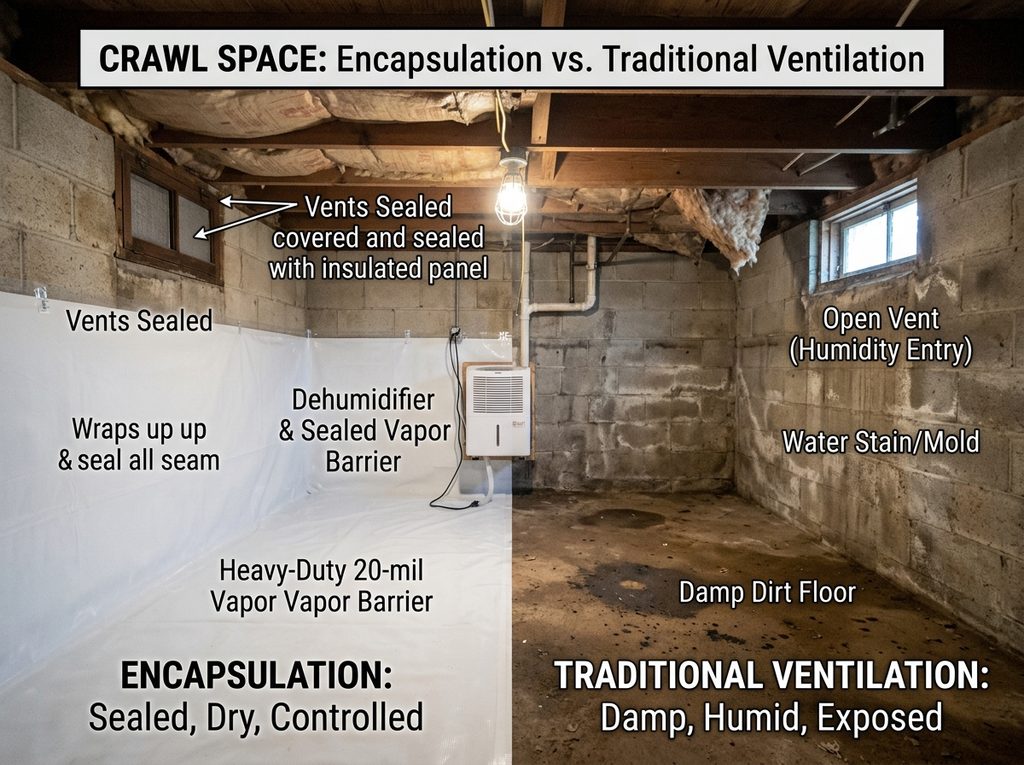
Homeowners researching how to fix a wet crawl space in Indiana typically choose between two approaches: sealing the space completely (encapsulation) or relying on vented crawl spaces to exchange air. The table below compares both methods directly across the factors that matter most to Central Indiana homeowners: moisture control, mold risk, HVAC impact, upfront cost, and ongoing maintenance.
| Feature | Crawl Space Encapsulation | Traditional Ventilation |
|---|---|---|
| Moisture control method | Sealed vapor barrier, dehumidifier, sump pump | Open foundation vents for airflow |
| Effectiveness in clay soil areas | Reduces humidity by 60–90% | Often increases humidity in summer |
| Mold prevention | High — eliminates standing water in crawl space | Low — condensation still forms on cool surfaces |
| HVAC system impact | Improves efficiency 15–20% | No measurable improvement |
| Insulation performance | Protects insulation from moisture | Common cause of crawl space insulation problems |
| Upfront cost (Central Indiana) | $5,500–$15,000 | $300–$1,500 (vent repair/replacement) |
| Long-term maintenance | Annual dehumidifier/sump pump check | Seasonal vent adjustment |
| Expected service life | 15–25 years (vapor barrier and sump system) | 5–10 years before vent covers or screens need replacement |
| Resale/home inspection impact | Often flagged as a value-add feature | Frequently cited as a deficiency in inspection reports |
Does Encapsulation Stop Crawl Space Moisture Better Than Ventilation in Indiana Homes?
Yes. Encapsulation combines a vapor barrier, sump pump, and dehumidifier to physically block groundwater and humidity. In contrast, ventilation depends on outside air, which in Indiana’s humid summers often introduces more moisture than it removes. The U.S. Department of Energy (2021) states that vented crawl spaces in humid climates can increase indoor humidity by up to 18%. Encapsulation benefits include stable crawl space humidity levels year-round, whereas ventilation performance fluctuates with outdoor weather. In practice, this means a vented crawl space may read 40% relative humidity in April but spike to 70% or higher during a humid July afternoon, while an encapsulated space typically holds steady between 45% and 55% regardless of season.
Crawl space ventilation issues are especially common in older homes. Why do older homes in Indiana have wetter crawl spaces? Many were built before 1990 with dirt floors, no vapor barrier, and vent-only designs that predate modern crawl space drainage system standards. The International Residential Code has since shifted toward allowing — and in many jurisdictions favoring — closed, conditioned crawl spaces over vented designs precisely because of these documented moisture failures. Homeowners with pre-1990 construction should treat ventilation-only designs as a legacy system rather than a long-term solution.
What Are the Signs of a Wet Crawl Space in Your Indiana Home?
Homeowners can detect hidden moisture in a crawl space using these observable indicators:
- Musty odor or visible mold growth on floor joists
- Standing water or damp dirt floor after rainfall
- Warped hardwood floors above the crawl space
- Rising energy bills from an overworked HVAC system
- Condensation on ductwork or insulation sagging from moisture
- Pest activity, including termites attracted to damp wood
- Visible rust on metal fasteners, HVAC components, or support posts
- A noticeable temperature difference between floors directly above the crawl space and the rest of the home
A professional crawl space inspection confirms whether moisture stems from groundwater intrusion, poor grading, or a failed vapor barrier. Most inspections include a moisture meter reading on exposed wood framing, a visual check for standing water or efflorescence on foundation walls, and an assessment of existing vapor barrier condition, if one is present. Homeowners searching for a reliable wet crawl space Central Indiana specialist should request a moisture reading and foundation assessment before approving any repair, and should ask for photographic documentation of the crawl space condition before and after any remediation work.
How Much Does It Cost to Waterproof a Crawl Space in Central Indiana?
Crawl space repair cost varies based on square footage and severity of moisture intrusion prevention needed. Typical 2025 pricing from basement waterproofing company estimates in the Indianapolis metro includes:
- Vapor barrier installation only: $1,500–$3,500
- Sump pump installation: $1,200–$2,800
- French drain installation: $2,000–$6,000
- Full encapsulation (barrier + dehumidifier + sump pump): $5,500–$15,000
- Foundation crack repair: $400–$2,500 per crack
- Dehumidifier-only retrofit (existing encapsulation): $1,000–$2,200
- Insulation replacement after moisture damage: $1,500–$4,000
These figures reflect foundation moisture issues typical of Central Indiana’s clay soil and high water table, not national averages. A 1,200-square-foot crawl space with an existing dirt floor, no drainage system, and visible mold typically falls at the higher end of the full encapsulation range, while a smaller, already-insulated crawl space with only minor humidity concerns may need just a vapor barrier and dehumidifier retrofit. Homeowners should obtain at least two itemized quotes before approving a project over $5,000, since scope and materials (6-mil versus 20-mil vapor barriers, for example) vary significantly between contractors.
Which Solution Fits Your Situation?
Scenario 1: Older Indianapolis Home With a Dirt Floor
Homes built before 1990 with exposed dirt floors need a vapor barrier and drainage system before any ventilation upgrade matters. Encapsulation addresses crawl space mold growth at its source. In these homes, dirt floors can release several gallons of water vapor per day into the crawl space air through simple evaporation, regardless of how many vents are installed. Sealing the floor with a heavy-duty vapor barrier is typically the single highest-impact step a homeowner can take.
Scenario 2: New Construction in a High Water Table Area
Builders in low-lying subdivisions should install a sump pump and French drain during construction. Waiting until symptoms appear increases crawl space repair cost by 30–50%, since retrofitting drainage after framing and insulation are already in place requires additional labor to access and protect existing materials. Proactive installation during the construction phase also avoids warranty disputes that can arise when moisture damage appears within the first few years of ownership.
Scenario 3: Rural Property Near the Hoosier National Forest Region
Properties with sandier, better-draining soil near this region may tolerate ventilation longer, but heavy rainfall drainage issues still require functioning gutter systems and downspouts directing water 6+ feet from the foundation. Even in these lower-risk areas, homeowners should monitor crawl space humidity seasonally with an inexpensive hygrometer, since localized drainage problems or nearby tree root intrusion can change soil conditions over time.
Scenario 4: Home With Existing Mold and HVAC Contamination
When crawl space air quality has already degraded HVAC system performance, full encapsulation with a dehumidifier is necessary to prevent recontamination after remediation. In these cases, mold remediation should be completed first, followed immediately by vapor barrier installation and dehumidifier setup, since leaving the crawl space exposed between remediation and sealing allows spores to re-establish from any remaining moisture source.
Crawl Space Encapsulation vs. Ventilation: Decision Framework
Choose encapsulation if:
- Your home sits on clay soil with documented groundwater intrusion
- You’ve seen standing water in crawl space after rainfall
- Mold prevention and indoor air quality are priorities
- You want measurable HVAC efficiency gains
- You plan to sell the home within 5–10 years and want to avoid inspection flags
Choose ventilation upgrades if:
- Your crawl space inspection shows no active groundwater intrusion
- Soil drainage is naturally good (sandy, well-graded lots)
- Budget constraints require a temporary, lower-cost fix
- Local code requires vented crawl spaces for your specific jurisdiction
For most Central Indiana homeowners facing clay soil, a rising water table, and unpredictable Indiana climate swings, encapsulation delivers more consistent, long-term crawl space humidity control than ventilation alone. A qualified inspection remains the most reliable way to confirm which category your home falls into before committing to either repair path.