
Direct answer: You stop water from pooling in your yard before winter by diagnosing low spots, redirecting downspouts, regrading the soil, and installing a drainage system such as a French drain, dry well, or swale. Most homeowners complete basic fixes in a single weekend (8–12 hours); full-scale drainage installation takes 2–4 days. Skill level: Intermediate DIY — grading and pipe installation require moderate landscaping skill, though persistent flooding often needs a professional drainage contractor.
Standing water in yard areas freezes in winter, causing ice patches, soil heaving, and foundation cracks. Poor yard drainage is a common source of residential water damage in freeze-thaw climates, so fixing it before winter helps prevent costly repairs.
Before You Begin: Prerequisites for Yard Drainage Repair
- Tools needed: shovel, level, string line, soil probe, landscape fabric, gravel, drainage pipe (4-inch perforated PVC)
- Materials: topsoil, compost, mulch, catch basin kit, downspout extension, permeable pavers (optional)
- Time required: 1 weekend for grading/downspout fixes; 2–4 days for a full French drain or dry well system
- Skill level: Intermediate — basic excavation and measuring skills required
- Safety: Call 811 a few days before digging to have underground utility lines marked
- Weather window: Complete all work before the first hard freeze (soil must remain workable)
Step 1: Diagnose the Source of Standing Water in Your Lawn
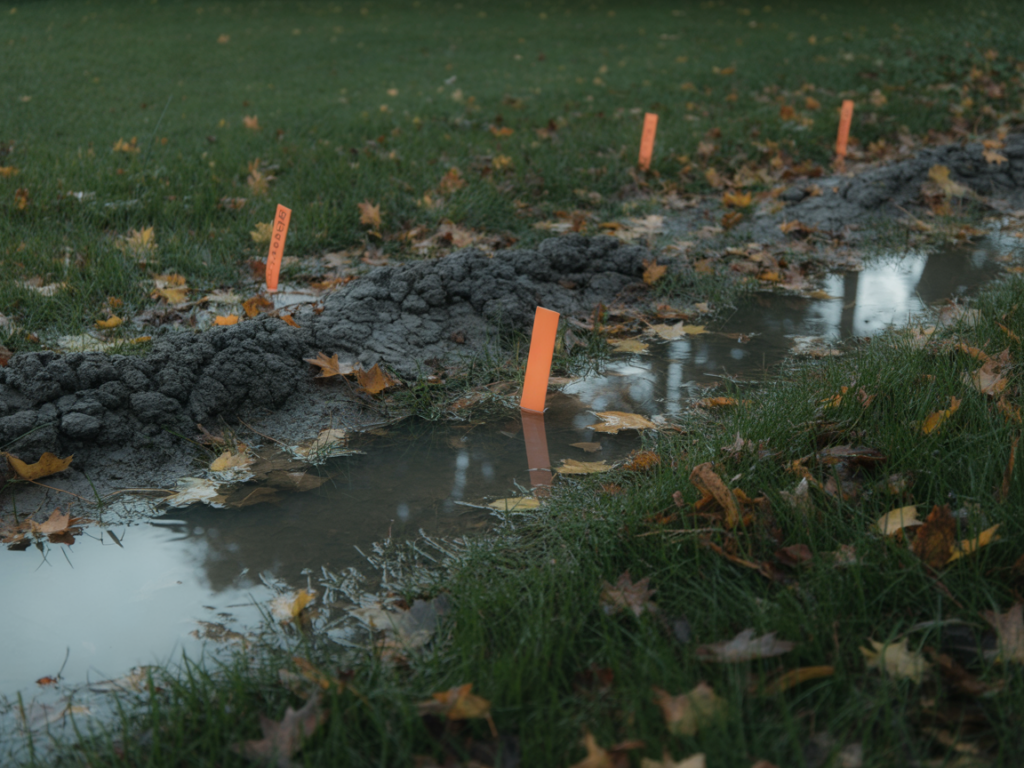
Map every spot where water pools longer than 24 hours after rain. Water pooling in lawn areas typically results from one of three causes: poor grading, compacted soil, or clogged gutters.
1.1 Test Soil Drainage
Dig a 12-inch hole, fill it with water, and time how long it takes to drain. If water remains after 24 hours, you likely have clay soil or soil compaction limiting absorption.
1.2 Map Low Spots
Walk the yard during or immediately after rainfall. Mark puddles with flags — this creates your drainage grading map for later steps.
Step 2: Inspect the Gutter System and Downspout Extension
A clogged or short gutter system is one of the most common causes of backyard water drainage problems near the house.
2.1 Clean Gutters
Remove leaves and debris before winter to prevent overflow pooling near the foundation.
2.2 Add a Downspout Extension
Extend downspouts at least 6–10 feet from the foundation. This simple fix often resolves minor pooling near the house.
Step 3: Improve Yard Slope for Drainage
Proper grading moves water away from structures using gravity rather than pipes.
3.1 Establish the Correct Slope
Grade soil to fall at least 6 inches over the first 10 feet away from the foundation — a 5% slope minimum.
3.2 Add Topsoil to Low Areas
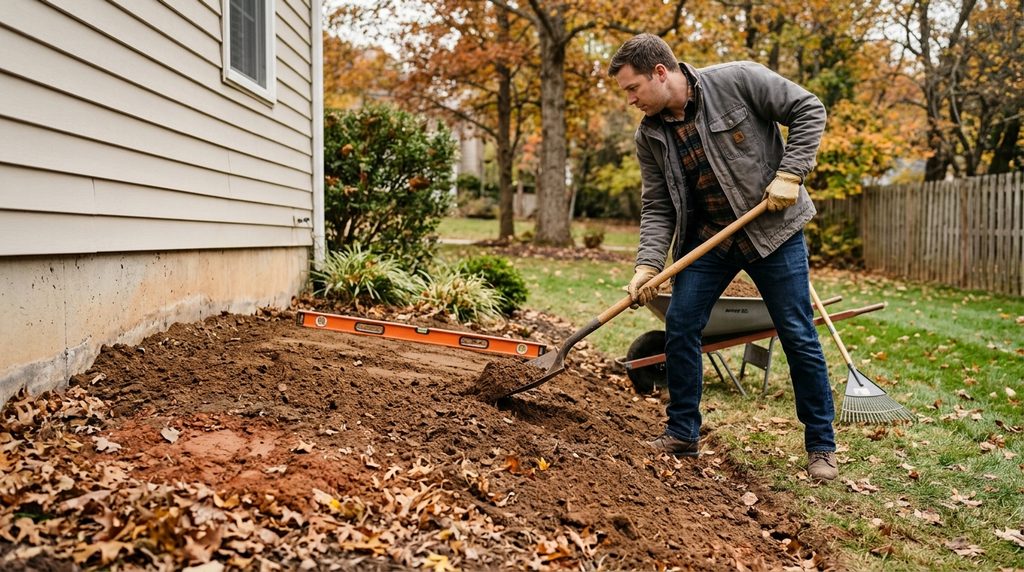
Fill depressions with topsoil, then compact lightly and reseed. This is the fastest way to fix a yard that holds water after rain.
Step 4: Install a French Drain for Persistent Wet Areas
A French drain is a trench filled with gravel and a perforated drainage pipe that channels water away from problem zones. It is one of the most effective DIY methods to stop yard flooding.
4.1 Dig the Trench
Dig 18–24 inches deep, sloping at least ¼ inch per foot toward a discharge point.
4.2 Lay Landscape Fabric and Pipe
Line the trench with landscape fabric, add 2 inches of gravel, place the drainage pipe, then cover with more gravel and fold the fabric over the top to prevent soil infiltration.
4.3 Backfill
Top with soil and sod. Unlike surface grading, a French drain manages subsurface water, making it ideal for clay soil yards with slow percolation.
Step 5: Add a Dry Well or Catch Basin
For yards with one severe trouble spot, a dry well or catch basin captures and disperses water underground.
5.1 Install a Catch Basin
Place a catch basin at the lowest point of your yard, connected to drainage pipe leading to a dry well or, where local codes allow, a municipal storm drain.
5.2 Build a Dry Well
Dig a pit about 3 feet deep and at least 10 feet from the foundation, fill it with gravel, and connect it to your French drain or downspout extension. A dry well works especially well in compacted or clay-heavy soil.
Step 6: Create a Swale or Rain Garden
A swale is a shallow, vegetated channel that redirects surface runoff naturally — a key technique in landscape drainage design.
6.1 Shape the Swale
Excavate a gentle, broad depression following the yard’s natural contour toward a safe discharge area.
6.2 Add a Rain Garden
Plant a rain garden with water-tolerant native species at the swale’s endpoint to absorb excess runoff and control erosion.
Step 7: Fix Soil Compaction and Clay Soil Issues
Compacted soil and clay soil both reduce infiltration, worsening lawn waterlogging over time.
7.1 Perform Lawn Aeration
Core-aerate compacted lawns each fall to open channels for water absorption — a top-recommended winter yard prep task.
7.2 Amend With Compost and Mulch
Work compost or other organic matter into the soil to improve drainage, and apply a 2-inch mulch layer over garden beds to reduce surface runoff before the winter freeze.
Step 8: Add Permeable Pavers, a Trench Drain, or a Retaining Wall
Hardscaping solutions work well for driveways, patios, and sloped yards prone to erosion.
8.1 Install Permeable Pavers
Replace solid concrete with permeable pavers to let water infiltrate instead of pooling on hard surfaces.
8.2 Add a Trench Drain
Install a trench drain across driveways or patios to intercept sheet flow before it reaches the lawn.
8.3 Build a Retaining Wall
On sloped properties, a retaining wall controls erosion and redirects runoff into a designated drainage path.
Step 9: Install a Sump Pump for Chronic Wet Yards
If your yard drainage system still can’t keep up, a sump pump actively removes water from a dry well or low-lying collection point. This is typically a last-resort mechanical solution for severe backyard drainage problems that grading and gravity systems can’t resolve alone. For homeowners facing persistent flooding, a professional yard drainage fix Indiana service can assess soil conditions and install a complete, code-compliant system before the ground freezes.
Troubleshooting Common Yard Drainage Problems
- If water still pools after regrading → check for underlying soil compaction and aerate before reseeding.
- If your French drain backs up → inspect the outlet for clogs or insufficient slope (minimum ¼ inch per foot).
- If puddles form near the foundation → extend downspouts further and verify grading slopes away from the house.
- If clay soil won’t drain → work in compost or organic matter; avoid adding sand alone, which can make clay denser.
- If water pools after snowmelt → your dry well may be undersized; enlarge it or add a second one.
Next Steps: Winterizing Yard Drainage for the Season Ahead
Once your yard drainage solutions are in place, complete these final winter lawn care tasks:
- Disconnect and store hoses to protect outdoor faucets from freeze damage.
- Re-inspect gutters monthly through late fall.
- Mulch garden beds to insulate soil and reduce erosion.
- Monitor low spots after the first freeze-thaw cycle in early winter.
Addressing standing water now prevents soil erosion, foundation damage, and lawn waterlogging once the winter freeze sets in. A well-planned yard drainage system — combining grading, French drains, and proper downspout management — remains the most reliable long-term fix for backyard water drainage.